 GET THE APP


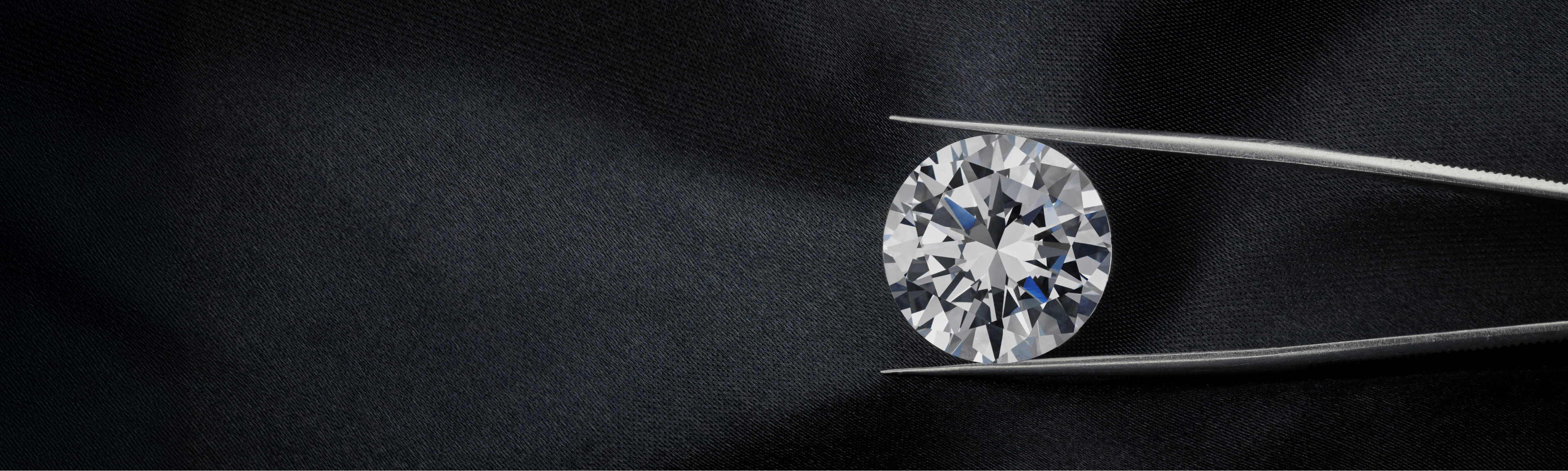
Quick Summary: Diamond shape refers to the geometric outline of a polished diamond, while diamond cut determines how effectively it reflects light. Both influence a diamond’s appearance, value, and personality. Drawing on insights from the Natural Diamond Council (NDC), this guide explains the most popular diamond shapes, how they differ from diamond cuts, which styles suit different jewellery pieces, and how to choose the right diamond for your style, occasion, and budget.
Note: This article has been adapted from original content published by the Natural Diamond Council (NDC) and has been repurposed for Tanishq.
Every diamond begins as a rough crystal with a form determined entirely by geology. What it becomes depends on the decisions made during cutting: which shape to pursue, which facet pattern to apply, and how precisely those facets are executed. These decisions have a greater effect on how a diamond looks in a finished piece than almost any other factor.
Understanding different diamond cuts and shapes is the starting point for any considered diamond purchase. Whether you are choosing a perfectly diamond-shaped ring for a proposal, a pair of diamond earrings for a milestone, or a diamond choker necklace for a celebration, the shape and cut of the stones define the character of the piece. This guide explains every major option, clearly and completely.
What Is Diamond Shape?
Diamond shape refers to the outline or silhouette of a polished diamond seen from above. It describes the overall form – round, pear, heart, and so on. Shape is distinct from cut, which governs the facet arrangement that produces brilliance and fire. Different types of diamonds have different shapes and cuts to define their brilliance.
For example, you would say “emerald diamond has a rectangular silhouette,” not “emerald cut,” unless you’re referring to the facet style. When talking about the diamond facets, these are the small, flat, polished surfaces on a diamond that reflect and refract light, creating its sparkle.
Types of Diamond Cuts
Brilliant Cut: The brilliant cut maximises light return with 58 facets arranged to produce exceptional fire and scintillation. The classic round diamond is the most famous example.
Step Cut: The step cut uses long, parallel facets to create broad flashes of light rather than a multitude of tiny sparkles. Emerald diamonds and Asscher cut diamonds are signature examples of this facet style.
Mixed Cut: A mixed cut blends brilliant-style facets with step facets. The radiant cut diamond and certain princess cut diamonds fall into this category, combining faceting techniques to balance brilliance and shape.
Diamond Shapes and Their Unique Characteristics
Every diamond shape has its own personality. While sparkle and proportions matter, the overall silhouette influences how a diamond looks when worn and the impression it creates. Understanding these characteristics makes it easier to choose a shape for a diamond necklace set that reflects your personal style.
Oval Diamond: Elegant and Elongated
Popularised in the 1950s, the oval diamond offers an elongated outline that flatters the finger. For a short diamond necklace, small oval shapes lend a modern, elongated effect. The oval diamond combines brilliant-cut sparkle with an elongated outline that creates the illusion of a larger stone. Oval diamonds suit solitaire rings, pendants, and delicate everyday jewellery equally well.
Pear Diamond: The Teardrop Shape
Recognisable by its rounded end and pointed tip, the pear diamond blends softness with elegance. Its distinctive silhouette creates graceful movement in pendants and drop earrings while offering a flattering elongated look in rings. It is an ideal choice for those looking for something classic yet distinctive.
Marquise Diamond: Maximum Impact
With pointed ends and a long, narrow body, the marquise diamond offers one of the largest face-up appearances for its carat weight. Its elongated proportions maximise visual size while creating a bold, elegant look. This shape is particularly striking in statement rings and pendant designs.
Cushion Diamond: Romantic Vintage Appeal
Known for its softly rounded corners and pillow-like silhouette, the cushion diamond has timeless appeal. Its larger facets create broad flashes of light, giving it a warm, romantic character. Cushion diamonds are especially popular in vintage-inspired engagement rings and heirloom-style jewellery.
Emerald Diamond: Sophisticated and Architectural
Unlike brilliant-cut diamonds, the emerald diamond features long step-cut facets that create broad reflections instead of intense sparkle. Its clean lines and rectangular shape highlight clarity and craftsmanship, making it a favourite for those who appreciate understated elegance and Art Deco-inspired design.
Radiant Diamond: The Best of Both Worlds
The radiant diamond combines the clean outline of an emerald shape with brilliant-style faceting for exceptional sparkle. Its trimmed corners improve durability while maintaining a contemporary appearance. This versatility makes it an excellent option for both modern rings and statement jewellery.
Heart Diamond: Symbol of Love
The heart diamond is one of the most recognisable and meaningful diamond shapes. Carefully cut to achieve perfect symmetry, it represents love, affection, and celebration. It is especially popular in pendants and milestone gifts, where its symbolism becomes part of the jewellery’s story.
As mentioned by the Natural Diamond Council in their blog about diamond shapes,“The heart-shaped diamond is for those who wear their love on their sleeve. Among the oldest diamond shapes, its royal roots trace back to 1463, when the Duke of Milan referenced a heart-shaped natural diamond in private correspondence. Though technically complex to shape, its allure lies in its obvious metaphor.”
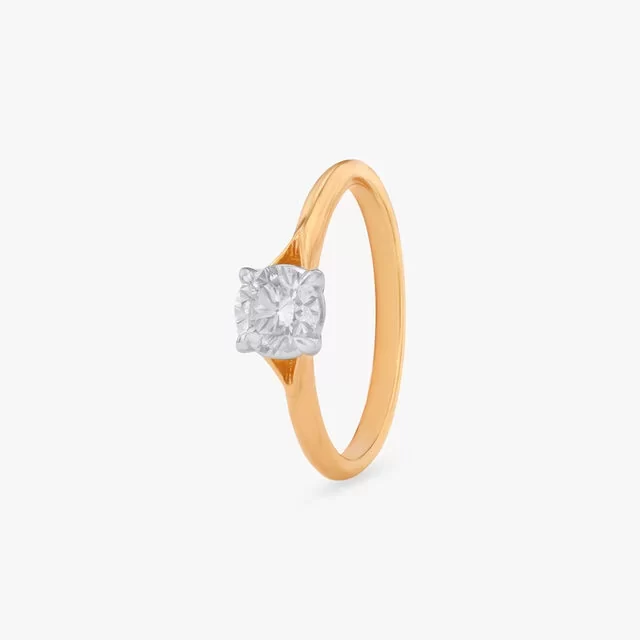
Dazzle Diaries Solitaire Ring
- 18 Karat yellow gold with a Hearts and Arrows round brilliant natural diamond
- A definitive expression of round diamond brilliance in a clean solitaire setting
- The ideal choice for those who want maximum light performance in a diamond ring
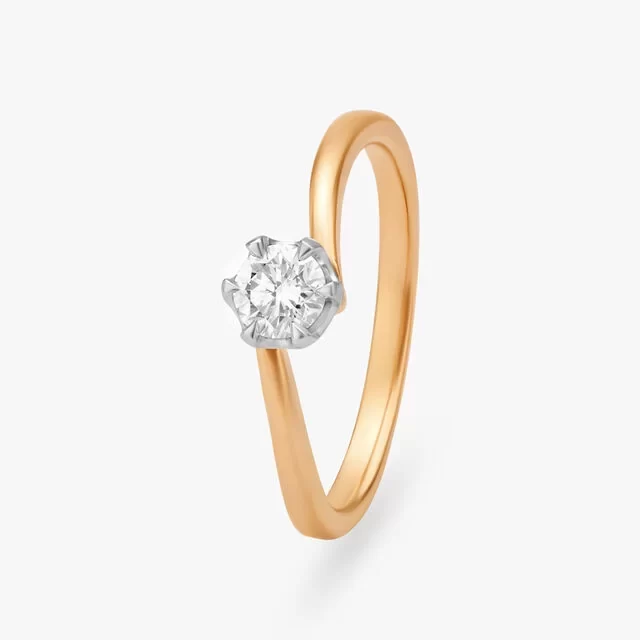
Radiant Embrace Solitaire Ring
- 18 Karat yellow gold with a twisted band and a round brilliant natural diamond solitaire
- Contemporary curved design that frames the diamond’s shape with elegance
- A versatile diamond ring suited to proposals and personal milestones equally
What Is the Difference Between Diamond Shape and Diamond Cut?
This is one of the most common points of confusion in different diamond cuts and shapes conversations. The table below clarifies the distinction precisely.
Dimension |
Diamond Shape |
Diamond Cut |
|---|---|---|
|
What it describes |
The geometric outline or silhouette of the polished diamond viewed from above |
The quality of facet arrangement, proportions, symmetry, and polish |
|
Examples |
Round, oval, princess, emerald, pear, cushion, marquise, heart, asscher, radiant |
Brilliant, step, mixed; graded as Excellent, Very Good, Good, Fair, Poor |
|
Determined by |
The cutter’s decision about the final form of the stone |
The precision with which facets are placed, angled, and finished |
|
Affects price? |
Yes. Round diamonds carry the highest premiums due to demand and rough yield. |
Yes. Excellent and Ideal cut grades command significant premiums. |
|
Affects sparkle? |
Indirectly. The shape determines which facet arrangement is possible. |
Directly. Cut quality is the primary driver of brilliance, fire, and scintillation. |
|
On the certificate? |
Listed as shape or cut style |
Listed as cut grade, along with polish and symmetry grades |
In practice: When you say you want a round diamond, you are specifying the shape. When you ask for an Excellent cut, you are specifying how precisely that round diamond has been faceted. Both decisions matter independently, and both appear on the diamond’s grading certificate.
Which Diamond Shape Is the Most Popular?
Globally, the round-shaped diamond leads, accounting for over 75% of sales of engagement diamond rings in key markets like the US and India, thanks to its classic outline and unmatched brilliance.
Which Shape Gives the Most Sparkle?
When proportioned ideally, the round brilliant cut diamond delivers the greatest radiance and scintillation. However, a well-executed mixed cut, such as radiant or princess, can rival its sparkle while offering a fresh geometric outline.
How Diamond Shape Influences Value
The table below summarises the key value dimensions of each major diamond shape, helping you make a comparison across the shapes that interest you most.
Diamond Shape |
Relative Price per Carat |
Perceived Size |
Rough Yield |
Best For |
|---|---|---|---|---|
|
Round Brilliant |
Highest |
Standard |
Low (high material loss) |
Maximum brilliance, engagement rings, solitaires |
|
Princess |
High |
Compact square |
Moderate |
Modern rings, channel settings |
|
Oval |
Moderate to high |
Appears larger than round |
Moderate |
Elongated finger effect, solitaires, pendants |
|
Cushion |
Moderate |
Standard to slightly large |
Moderate |
Romantic, vintage-style rings |
|
Pear |
Moderate |
Appears larger due to length |
Good |
Pendants, drop earrings, finger-lengthening rings |
|
Marquise |
Moderate |
Largest perceived size per carat |
Good |
Statement rings, necklace pendants |
|
Emerald |
Moderate |
Long and open |
High (low material loss) |
Art Deco rings, clarity showcase |
|
Asscher |
Moderate |
Compact, deep appearance |
Moderate |
Vintage rings, step-cut lovers |
|
Radiant |
Moderate |
Square to rectangular |
Moderate |
Mixed brilliance and shape versatility |
|
Heart |
Moderate |
Varies by length-to-width ratio |
Low |
Romantic pendants, milestone gifts |
Popular Diamond Shapes for Different Jewellery Types
Jewellery Type |
Best Shapes |
Why |
|---|---|---|
|
Engagement ring solitaire |
Round, oval, cushion, pear |
Brilliant or mixed cuts maximise sparkle in open prong settings |
|
Halo ring |
Round, oval, cushion, princess |
The shape of the centre stone is framed and amplified by the accent halo |
|
Stud earrings |
Round, princess, cushion |
Compact shapes sit securely and symmetrically in stud settings |
|
Drop earrings |
Pear, oval, marquise, heart |
Elongated shapes create natural movement and directionality |
|
Pendant necklace |
Round, pear, heart, oval |
Round returns maximum light; pear and heart add romantic character |
|
Diamond choker necklace |
Round, princess |
Small, uniform shapes create a continuous, even river of light |
|
Tennis bracelet |
Round, princess |
Compact brilliant shapes sit flush and move comfortably on the wrist |
|
Statement necklace |
Marquise, oval, emerald |
Elongated shapes add drama and visual weight to statement designs |
Choose the Right Diamond Shape for You
Choosing a diamond shape is one of the most crucial decisions in picking diamond jewellery. There is no objectively correct answer. The right shape is the one that aligns with how you wear jewellery, what occasions you intend it for, and the aesthetic you naturally gravitate toward.
- If sparkle is your priority: Round with brilliant cut, oval, or radiant.
- If elegance and understatement matter most: Emerald or asscher.
- If you want maximum visual size per carat: Marquise or oval.
- If you want a finger-lengthening effect: Oval, marquise, or pear.
- If you want timeless versatility: Round brilliant, the best diamond cut for consistent performance across all settings, styles, and occasions.
- If you want romantic symbolism: Heart or pear, particularly in a pendant setting.
Understanding Diamond Shapes at the Diamond Expertise Centre (DXC)
Choosing between different diamond cuts and shapes on paper is useful. Seeing how each shape actually performs, in real light, held in your hand, through professional instruments, is decisive. So, here’s the answer to what is DXC: a first-of-its-kind in-store experience in Tanishq where you can test any natural diamond for yourself, free of cost.
Check its clarity and light performance using advanced lab grade instruments, understand how different diamonds sparkle, and make your choice based on proof rather than promise. By making every detail visible and verifiable, DXC transforms diamond buying into an informed, confidence-led experience rather than one based solely on trust.
At the Diamond Expertise Centre, a trained gemmologist guides you through the performance of every shape you are considering. You can compare different cut solitaires under the Light Scope and see how the fire, scintillation and brilliance of the diamond come out, observe how the clarity grade of your diamond under the Clarity Viewer by clearly seeing the inclusions in it and understand whether it is VS, VVS or SI, and confirm the natural origin of any stone with the Diamond Caratmeter before making your decision.
The Diamond Expertise Centre is currently available at 172 Tanishq stores across India and is expanding. Find your nearest Tanishq Diamond Expertise Centre store and experience diamonds the way they are meant to be understood: in person, with full information. Choose with confidence based on proof, not just trust.
Conclusion
Every diamond shape tells a different story. The round brilliant speaks of precision and timeless maximalism. The emerald speaks of restraint and architectural confidence. The oval flatters and elongates. The pear carries romance in its very form. The heart declares its meaning before it is even examined closely.
Understanding different diamond cuts and shapes does not make the choice harder. It makes it more personal. When you know what each shape does, how it interacts with light, what it looks like on the hand or at the neckline, and what it conveys about the person who wears it, you are not choosing from a list of options. You are recognising the one that is right.
Tanishq’s diamond collection offers a wide variety of diamond cut shapes across rings, earrings, necklaces, bracelets, and more. Every stone is certified, natural, and verified by the Tanishq Gemmological Lab.
Frequently Asked Questions
Diamond shape refers to the geometric outline of the polished stone. Diamond cut refers to the quality of the facet arrangement within that shape, including the precision of angles, proportions, polish, and symmetry.
The round brilliant cut diamond delivers the greatest measurable sparkle of any shape. Its 58-facet radial arrangement achieves total internal reflection consistently, returning the maximum possible amount of light through the crown. Among fancy shapes, the oval and radiant deliver the strongest light performance, both using brilliant-style faceting in modified outlines. Step cuts such as the emerald and asscher produce a different quality of light, broader and more architectural, rather than less of it.
The marquise delivers the largest face-up surface area per carat of any diamond shape. Its elongated, pointed form maximises the visible surface without requiring additional weight.
Oval, marquise, and pear diamond cut shapes are most effective at creating a finger-lengthening visual effect. All three have elongated silhouettes that align with the length of the finger rather than sitting across it.
The right diamond shape is determined by three factors: how you plan to wear the piece, which aesthetic suits your personal style, and which performance characteristics matter most to you. If maximum sparkle is the priority, a round brilliant is the answer. If you want a larger-looking stone within a specific budget, oval or marquise shapes deliver more face-up size per carat. If you value a refined, architectural look, an emerald or asscher shape is the most appropriate choice.