 GET THE APP



Know what clarity grades like VVS, VS and SI mean for natural diamonds, and which diamond clarity grade offers the best value in different buying situations. Also, learn how the Tanishq Diamond Expertise Centre (DXC) helps customers make informed decisions with proof using advanced machines in-stores to test diamonds.
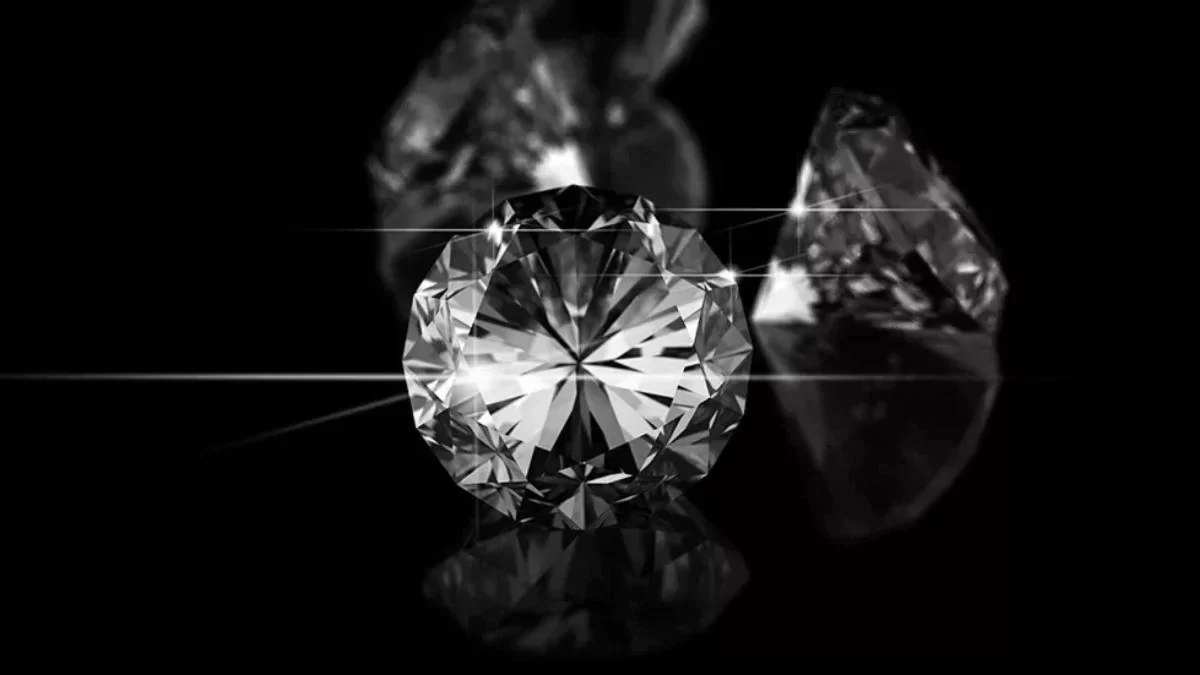
Natural diamond crystals are valued for their rarity, origin and unique internal characteristics.
For most natural diamond jewellery, VS2 (Very Slightly Included) or SI1 (Slightly Included) are commonly chosen clarity grades in India, offering a balance between appearance and price. While higher grades such as VVS (Very Very Slightly Included) and IF (Internally Flawless) may seem more desirable, many VS2 and SI1 diamonds have inclusions that are difficult to see with the naked eye. However, these inclusions make these natural diamonds affordable as compared to the higher clarity grades. Hence, understanding the clarity scale can help buyers choose a grade suited to their jewellery type and identify where paying more may not make a visible difference.
Key Takeaways
- Natural diamond clarity is graded on an 11-grade scale ranging from FL to I3 under 10x magnification.
- VVS, VS and SI diamonds all contain inclusions, though many VS and SI diamonds appear eye-clean.
- Higher clarity grades such as FL, IF and VVS are often preferred for larger diamonds and step-cut shapes like emerald and asscher cuts.
- The Tanishq Diamond Expertise Centre (DXC) lets customers examine the origin, inclusions, clarity and other characteristics of any natural diamond using specialised instruments, with guidance from trained gemmologists, free of cost. You can test any diamond not just Tanishq diamonds.
Clarity is one of the 4Cs used to assess a natural diamond, alongside colour, cut and carat weight. It refers to the presence of internal inclusions and external blemishes, which gemmologists examine under 10x magnification using a jeweller’s loupe. Clarity grades run on a universal scale from FL (Flawless) to I3 (Included) and measure the presence and visibility of internal inclusions and external blemishes under 10x magnification.These characteristics determine a diamond’s position on the clarity scale, but they do not always have a noticeable effect on how it looks to the naked eye.
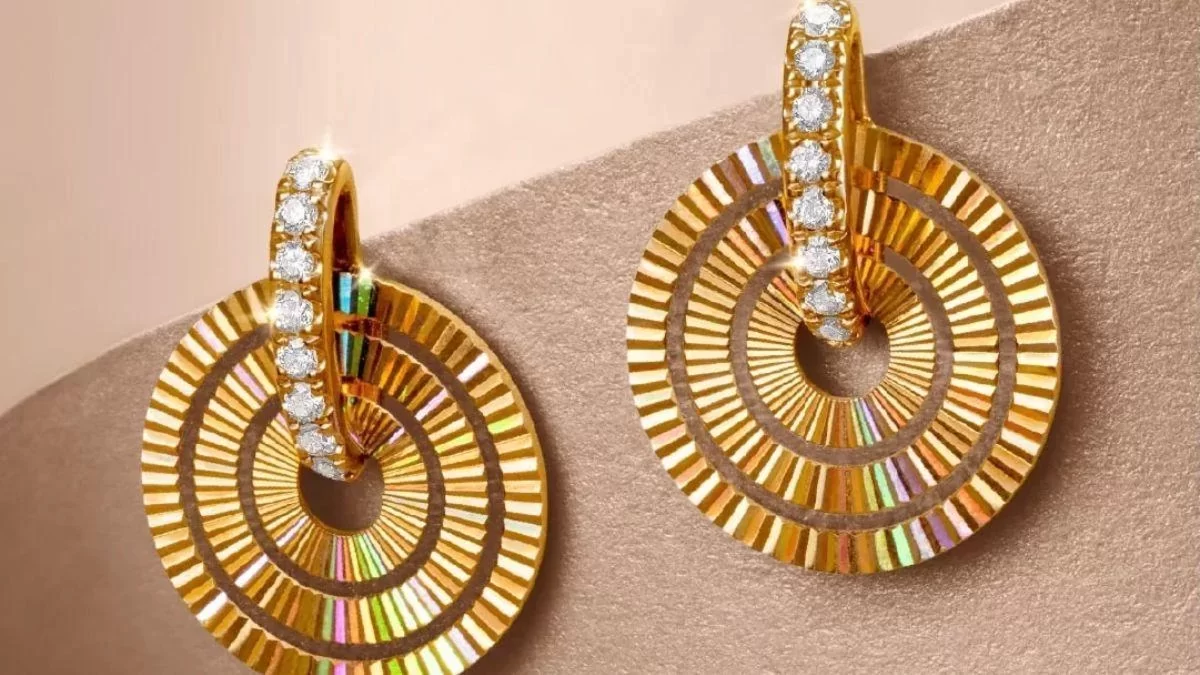
Natural diamond earrings are designed to highlight brilliance, sparkle and everyday wearability.
Terms such as VVS, VS and SI frequently appear on diamond certificates and product brochures, but their meanings are often misunderstood. A higher clarity grade does not automatically mean a diamond will look visibly better. The right choice depends on how inclusions affect the stone’s appearance, along with its cut, colour and carat weight.
Natural Diamond Clarity: What Buyers Need to Know
The clarity conversation often comes down to three grades: VVS, VS and SI. These categories dominate the Indian diamond market and are commonly seen on certificates, product brochures and jewellery listings. While they sit relatively close to one another on the clarity scale, the differences between them can significantly influence price and buying decisions, making it useful to understand what each grade represents.
What Do VVS, VS and SI Clarity Mean in Diamonds?
The difference between VVS, VS and SI graded diamonds is how visible inclusions are under 10x magnification and whether those inclusions are likely to be noticeable during everyday viewing. The table below summarises the differences between these clarity grades and whether the inclusions are visible to the naked eye.
Clarity Grade |
Category |
Visibility at 10x Magnification |
Visible to Naked Eye? |
|---|---|---|---|
|
VVS1 / VVS2 |
Very Very Slightly Included |
Minute inclusions, extremely difficult to see under magnification |
No |
|
VS1 / VS2 |
Very Slightly Included |
Minor inclusions, difficult to see under 10x magnification |
No |
|
SI1 / SI2 |
Slightly Included |
Noticeable inclusions under magnification, but often eye-clean |
Often not visible |
What Is the Diamond Clarity Grading Scale?
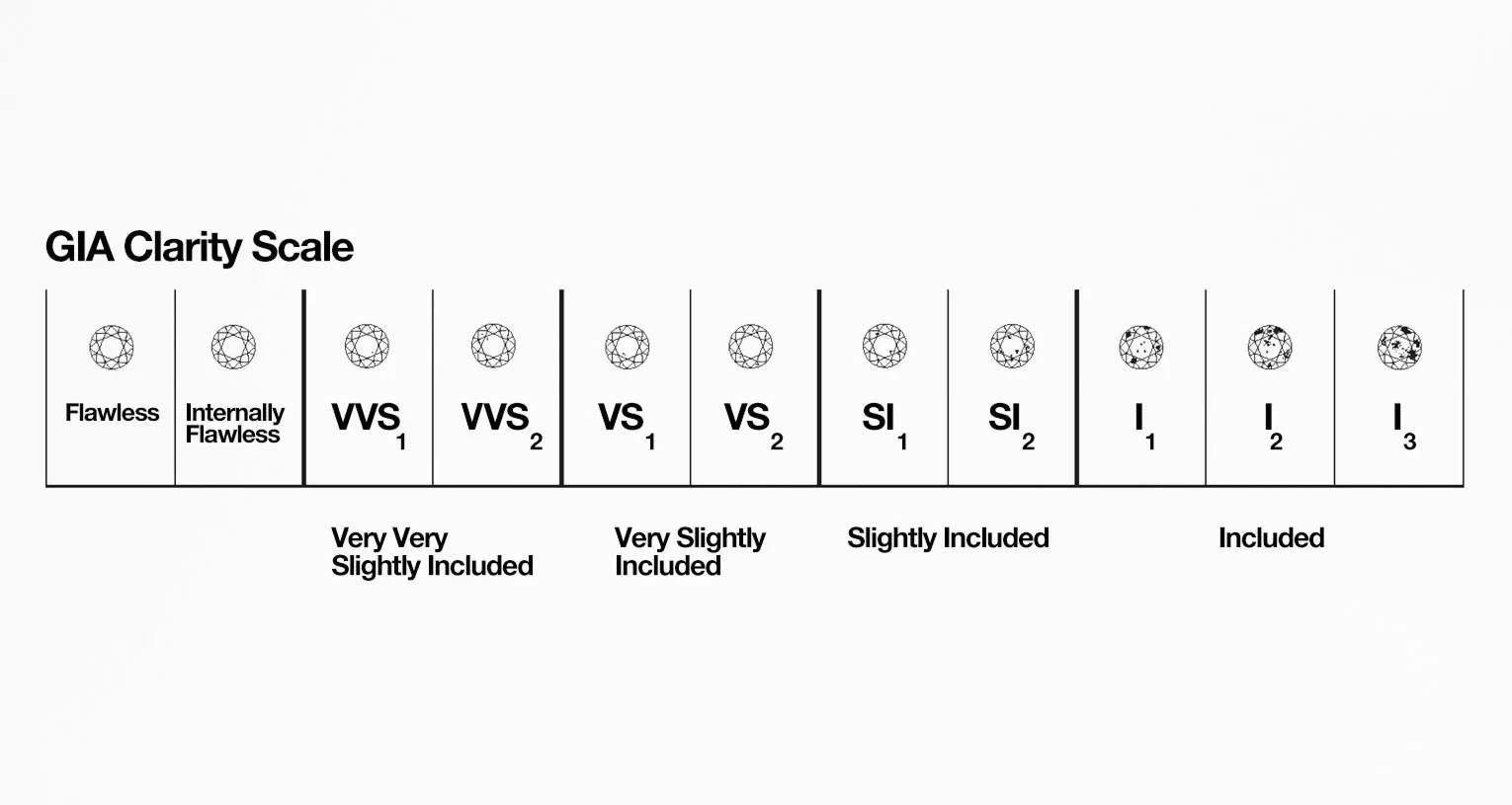
GIA Diamond Clarity Scale
The natural diamond clarity grading scale is a universal scale ranging from Flawless (FL) to Included (I3). This system reflects how easily inclusions and blemishes can be observed under 10x magnification.
Although the scale contains 11 individual grades, buyers most commonly encounter diamonds in the VVS, VS and SI categories.
Clarity Grade |
Category |
Visibility at 10x Magnification |
|---|---|---|
|
FL |
Flawless |
No inclusions and no blemishes visible at 10x magnification |
|
IF |
Internally Flawless |
No inclusions and only insignificant blemishes visible at 10x magnification |
|
VVS1 and VVS2 |
Very Very Slightly Included |
Minute inclusions that range from extremely difficult (VVS1) to very difficult (VVS2) to see at 10x magnification |
|
VS1 and VS2 |
Very Slightly Included |
Minor inclusions that range from difficult (VS1) to somewhat easy (VS2) to see at 10x magnification |
|
SI1 and SI2 |
Slightly Included |
Noticeable inclusions that are easy (SI1) or very easy (SI2) to see at 10x magnification, but usually not visible to the eye |
|
I1, I2 and I3 |
Included |
Obvious inclusions visible at 10x magnification, often seen with the unaided eye |
Which Diamond Clarity Grade Offers the Best Value?
For many buyers, VS2 and SI1 clarity grades offer the best balance of appearance and value. While prices typically increase as clarity improves, the visible difference between adjacent clarity grades is often less noticeable than buyers expect. In almost all cases, the clarity features in both VVS and VS diamonds cannot be seen with the naked eye. Yet price differences between these two grades can be as high as 40%.
The best clarity grade ultimately depends on how the diamond will be worn. A small diamond in a pair of stud earrings may not require the same clarity level as a larger solitaire ring, particularly when viewed from everyday distances.
Diamonds with brilliant-cut facet patterns, such as round, oval and pear shapes, often conceal inclusions more effectively than step-cut shapes. This means buyers can often consider slightly lower clarity grades without affecting the diamond’s visible appearance.
Diamond Product for Purchase |
Clarity Grade to Consider |
|---|---|
|
Everyday studs and smaller accent stones |
SI1 or VS2 |
|
Solitaire under 1 carat |
VS2 or SI1 |
|
Solitaire 1 carat and above |
VS1 or VS2 |
|
Brilliant-cut solitaire |
VS2 or SI1 |
|
Step-cut solitaire |
VS1 or higher |
Buyers can achieve better overall value by selecting a clarity grade that suits the diamond’s size, shape and intended use, instead of focusing only on the highest grade available.
Does Diamond Clarity Affect Sparkle?
Diamond clarity can affect sparkle, but usually only when inclusions become large enough to interfere with the movement of light through the stone. In most VS and SI diamonds, cut quality has a much greater impact on sparkle than clarity.
At Tanishq, diamonds with inclusions that disrupt light performance, create a milky appearance or compromise durability are filtered out, even if those inclusions are technically permitted within the assigned clarity grade. Its selection process also ensures that diamonds used in a jewellery piece belong to the same colour and clarity bands as those mentioned on the certificate. Before being set, loose diamonds are examined by expert gemmologists through multiple quality checks using specialised equipment. Tanishq checks over 20 million diamonds every year before they are used in jewellery. The company also follows a 100% caratage-assurance policy, with diamonds in its in-house-produced jewellery weighed up to three decimal places. This ensures that the stated diamond weight reflects the actual content of the piece, without rounding up the caratage for billing.
Is SI Clarity Good for a Diamond?
Yes. SI clarity can be a good choice for many natural diamond buyers, particularly when the goal is to balance appearance, size and budget.
SI1 diamonds are often eye-clean, especially in smaller carat weights and brilliant-cut shapes. SI2 diamonds can also offer value, although visibility depends more on the size, position and nature of the inclusions.
In Tanishq’s natural diamond portfolio, SI clarity diamonds can offer a strong value proposition. Thoughtful diamond placement within the finished piece helps minimise the visibility of inclusions during normal viewing, allowing the jewellery to appear comparable to pieces featuring higher clarity grades while delivering better overall value.
What Does ‘Eye-Clean’ Mean, and How Does the Size of a Diamond Change It?
A natural diamond is considered eye-clean when no inclusions are visible to the naked eye from a normal viewing distance of approximately 25 to 30 centimetres. Eye-clean is a visual assessment and does not appear as a grade on the clarity scale.
While many VS and SI diamonds can appear eye-clean, visibility often changes as a diamond becomes larger. Bigger diamonds offer a larger viewing area, making inclusions easier to spot in some circumstances.
Brilliant-cut diamonds tend to disguise inclusions more effectively, while step-cut diamonds feature larger, open facets that can make internal characteristics easier to notice.
Diamond Shape Type |
Inclusion Visibility |
|---|---|
|
Brilliant-cut shapes (round, oval, pear) |
Facet patterns often help disguise small inclusions |
|
Step-cut shapes (emerald, asscher) |
Open facets can make inclusions easier to notice |
This is one reason why clarity recommendations often vary depending on the shape a buyer selects.
How Does Tanishq Check the Clarity of Its Diamonds?
Every piece in Tanishq’s diamond collection is evaluated using the globally recognised 4Cs framework: carat, colour, clarity and cut. The selected diamonds further undergo assessments to ensure they meet Tanishq’s internal quality standards for appearance, light performance and durability.
The Tanishq Gemmological Lab (TGL) certifies every diamond through a rigorous evaluation process. Established in 2002, TGL has evaluated over 100 million diamonds to date, making Tanishq one of India’s largest diamond sourcing retailers. Backed by a team that includes 11 PhD holders, the lab assesses diamonds across the 4Cs and advanced light-performance parameters. Solitaire diamonds undergo additional evaluation for fire, brilliance and scintillation.
With over two decades of research and Titan’s Responsible Sourcing Framework, TGL ensures that diamonds are responsibly sourced, conflict-free and traceable. Its laboratories in Mumbai, Pantnagar and Hosur use advanced technologies such as spectrophotometry and Raman spectroscopy to verify natural diamonds at different stages. Every studded product is issued a TGL Certificate of Authenticity, providing customers with documented assurance of its quality and authenticity.
What Can Customers Verify At The Diamond Expertise Centre (DXC)?
Customers can verify any natural diamond free of cost at the Tanishq Diamond Expertise Centre (DXC). Using advanced, lab-grade technology, the DXC allows customers to examine a diamond’s origin, clarity characteristics, light performance and authenticity using specialized machines. The machines included in DXC are:
- Caratmeter: Helps distinguish natural diamonds from synthetic alternatives, allowing customers to verify a diamond’s origin.
- Light Scope: Demonstrates a solitaire’s brilliance, fire and scintillation, helping customers understand how its cut influences light performance.
- Clarity Viewer: Magnifies the inclusions within a diamond, allowing customers to examine its clarity characteristics and compare them with the grade mentioned on its certificate.
- Marking Viewer: Displays the Tanishq logo and Unique Identification Number (UIN) inscription, helping verify brand authenticity and traceability.
- Hearts and Arrows Viewer: Displays the distinctive hearts-and-arrows pattern in round diamonds, associated with excellent cut quality.
A trained gemmologist guides customers through the process, helping translate technical grading information into something they can see and understand for themselves. Customers can also bring their own natural diamonds to the centre for evaluation.
The Diamond Expertise Centre is currently available at 232 Tanishq stores out of 500+ across India, with additional locations being introduced soon. You can check out your nearest DXC from here: https://stores.tanishq.co.in/dxc-stores.
Frequently Asked Questions
Yes, VVS clarity may be worth considering for larger diamonds or for buyers seeking extremely high clarity grades. However, many VS2 and SI1 natural diamonds appear visually clean without the additional cost associated with VVS grades.
No, in most cases, inclusions in a VS2 natural diamond are not visible to the naked eye. Visibility depends on the diamond's size, shape and the location of the inclusion.
Cut generally has the greatest impact on a diamond's sparkle and light performance. However, clarity, colour and carat weight should be evaluated together when choosing a natural diamond.
No, most inclusions do not affect the durability of a natural diamond. Inclusions are formed over billions of years under conditions of extreme heat and pressure, and become significant only when they are large, surface-reaching or located in sensitive areas of the stone.
Tanishq follows matching standards within a jewellery design to maintain visual consistency. Diamonds used within the same piece are selected to achieve a balanced overall appearance.
For many engagement rings, VS2 and SI1 clarity grades offer an attractive balance of appearance and value. Larger solitaire diamonds and step-cut designs may benefit from higher clarity grades such as VS1.