 GET THE APP


Most people encounter the 4 Cs of diamonds right when they’re already overwhelmed. There’s a ring to choose. A budget to consider. A moment that matters. And suddenly someone is talking about charts, grades and magnification lenses. So, let’s slow this down.
Here is what is worth knowing first: a diamond’s 4 Cs are not a complexity designed to overwhelm. They are a shared language, created so that a diamond can be described precisely and compared honestly. Once you understand what each C measures and what it does not, you can use the 4 C chart for diamonds as a tool rather than navigate it as an obstacle.
This guide covers each of the diamond C’s clearly, shows you how they interact, and helps you find the right combination for your purchase.
What Are the 4 Cs?
The 4 diamond Cs stand for Carat, Colour, Clarity and Cut. These four factors determine a diamond’s beauty, rarity and price. They are used globally, graded under strict standards and together form the basis of the every 4 C chart for diamonds.
What’s important to remember is this:
All four Cs matter equally. There is no “best” C. Only the right balance for you.
C1 – Carat Weight
Carat is the most misunderstood of the 4 Cs of diamonds. It refers to weight, not size. One carat equals 0.2 grams, and even small differences in carat weight can change pricing significantly.
Here’s the thing no one tells you upfront: A one-carat diamond does not always look bigger than two diamonds of half a carat each. Larger stones are rarer, which is why prices jump sharply at full-carat milestones.
Think of carat like square footage. Two homes can have the same area, but how that space is designed makes all the difference.
C2 – Colour
When we talk about diamond colour, we’re actually talking about the absence of colour. Most diamonds used in jewellery fall in a range from colourless to slightly warm tones.
The more colourless a diamond appears, the rarer and more valuable it becomes. This is why diamond colour and clarity are often discussed together. Subtle colour differences are usually invisible to the naked eye but matter greatly under grading conditions.
Under warm Indian lighting, many near-colourless diamonds look just as beautiful as top-grade stones. Context matters.
C3 – Clarity
Clarity refers to natural inclusions and surface features inside a diamond. These are formed during their creation deep within the earth and are graded under 10x magnification.
Here’s the reassuring part: Most inclusions are invisible without tools. They don’t weaken the diamond. They simply make it unique.
So, think of clarity like freckles. They don’t diminish beauty. They make it personal.
This is especially important when buying real diamond jewellery meant for everyday wear, or statement pieces like real diamond earrings for men, where durability and character matter as much as perfection.
C4 – Cut
If the other Cs describe the diamond, the cut defines how it behaves.
Cut determines how light enters, reflects, and exits the stone. A well-cut diamond looks brighter and more livelylivelier than a poorly cut one, even if the latter has better colour or clarity.
In fact, cut is the only C directly influenced by human craftsmanship. It’s where science meets art. This is why expert cutting maximises sparkle, fire and brilliance.
Life parallel? You can have talent, resources and opportunity. But without refinement, none of it shines.
How the 4Cs Work Together
This is where the diamond 4 C chart becomes useful. It helps you understand trade-offs.
A slightly smaller diamond with excellent cut can outshine a larger one with average proportions. A near-colourless diamond with good clarity can look flawless once set. The secret is balance. The 4 C chart for diamonds isn’t a scorecard. It’s a guide to help you prioritise what matters to you.
Two examples illustrate this:
- Scenario A: 1.00 ct, Good cut, F colour, VVS1 clarity. The stone has exceptional colour and clarity, but light leaks. Face-up, it looks flat and lifeless.
- Scenario B: 0.90 ct, Excellent cut, H colour, VS2 clarity. The stone looks marginally smaller face-up but is dramatically more brilliant. It captures and returns light from every angle.
Scenario B is the better diamond for almost every purpose. This is the practical lesson the 4 Cs teach when read together rather than in isolation.
4 Cs of Diamonds Charts
The 4 C chart for diamonds serves a practical purpose: it shows you the trade-off space so you can prioritise intelligently. Below is a guide to choosing your combination based on what matters most.
Priority |
Focus |
What to Trade Off |
|---|---|---|
|
Maximum sparkle |
Excellent cut; G-H colour; VS2 clarity |
Slightly smaller carat for the same budget |
|
Maximum size |
Larger carat; I-J colour; SI1 clarity (eye-clean) |
Marginally lower colour and clarity grades |
|
Maximum purity |
VVS or VS clarity; D-F colour; Excellent cut |
Smaller carat to maintain quality across all four Cs |
|
Everyday wearability |
Excellent cut; G-H colour; SI1 (confirmed eye-clean) |
Non-significant; this is the most practical combination |
|
Investment focus |
Round brilliant; GIA certified; D-F; VVS-VS; above 1 ct |
Higher entry cost; focus on provenance and documentation |
A few observations from this framework:
- Cut should never be traded off. Fix it at Excellent before adjusting anything else.
- Colour and clarity reductions below their eye-clean thresholds produce no visible change in everyday wear. The savings are real; the compromise is not visible.
- Carat weight below milestone thresholds (staying at 0.95 ct rather than 1.00 ct, for example) can unlock meaningful quality improvements in the other three Cs for the same spend.
4 Cs of Diamonds Tips: Finding Your Perfect Combination
The ideal diamond is rarely the one with the highest grades across every category.
Instead, focus on creating a balanced combination.
Tanishq Tip
- Prioritise cut quality before anything else.
- Compare diamonds in natural lighting whenever possible.
- Look for balance rather than chasing the highest grade.
When selecting real diamond jewellery, consider how the piece will be worn. Everyday jewellery often benefits from a practical balance of carat, colour, clarity, and cut rather than pursuing extreme rarity in a single category.
Natural Diamond Jewellery from Tanishq
Every piece in Tanishq’s diamond collection is backed by independent certification. Each stone is graded, documented, and presented transparently. The following pieces illustrate how the 4 Cs of diamonds express themselves across different jewellery contexts.
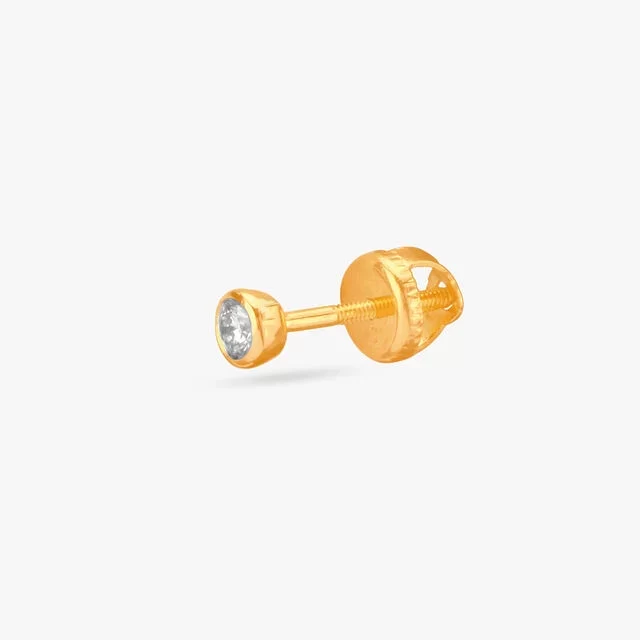
Charming Diamond Stud Earring for Men
Crafted in 18 Karat yellow gold with an SI2 clarity natural diamond, this piece demonstrates how cut and carat work together in a stud earring context. The stone’s brilliance under light is determined entirely by its cut quality. For real diamond earrings for men, this is the essential specification: a well-cut stone, set confidently, that speaks through its light performance rather than its size.
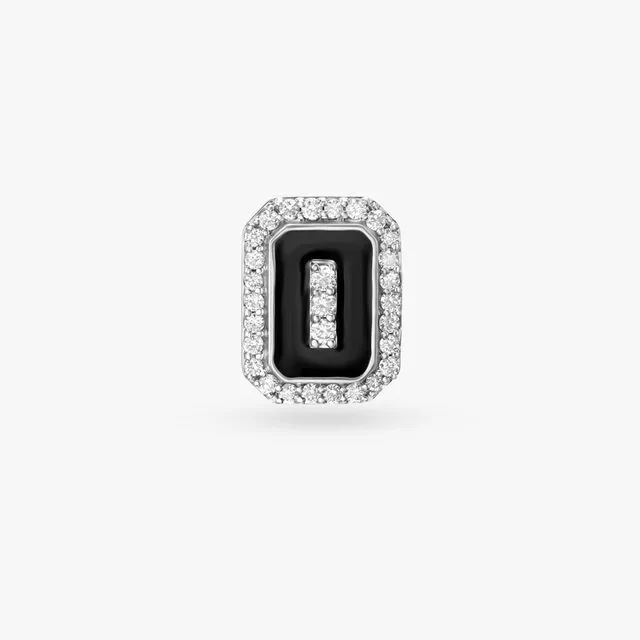
Bold and Classy Diamond Stud Earring for Men
Set in 18 Karat white gold with black enamel and SI2 clarity diamonds, this piece illustrates how setting metal and colour interact with the 4 Cs. The white gold enhances the near-colourless diamonds while the black enamel contrast amplifies the stones’ visual presence. A piece that shows how the 4 Cs of diamonds are as much about setting context as they are about the stone in isolation.
Diamond Expertise Centre (DXC): Understanding the 4Cs of Natural Diamonds
Understanding the 4 Cs becomes much easier when you can see the differences for yourself.
At a Tanishq Diamond Expertise Centre (DXC), customers can compare diamonds across various grades while receiving guidance from trained experts. Dedicated viewing tools help reveal subtle distinctions in cut quality, colour, clarity, and overall light performance that may not be obvious at first glance.
The Diamond Expertise Centre store is a dedicated consultation space within select Tanishq showrooms. It is equipped with professional gemological instruments and staffed by trained diamond specialists. Every customer is allowed to examine their diamond’s actual characteristics, not simply read about them.
- Clarity Viewer. See the inclusions described in the certificate under magnification. Understand what VS2 means for this specific stone.
- Light scope. Observe how the cut grade translates into actual light performance. Compare two stones with different cut grades side by side.
- Caratmeter. Verify that the stone is a natural diamond, confirmed against its grading documentation.
- Certificate review. A specialist walks through every line of the diamond grading report, translating the diamond 4 C chart grades into plain language for the specific stone in front of you.
For anyone wondering what is DXC, it is a space designed to make the journey of understanding natural diamonds more transparent, educational, and engaging.
Conclusion
The 4 Cs of diamonds are not rules meant to restrict you. They exist to empower you.
Once you understand the diamond C’s, you stop being sold to and start making informed choices. You begin to see diamonds not as intimidating luxury objects, but as natural, ancient, extraordinary materials shaped thoughtfully for modern lives.
Whether you’re choosing an engagement ring, a gift or investing in real diamond jewellery for yourself, knowledge is what makes the purchase meaningful.