 GET THE APP



Long before these architectural details found their way into jewellery, they were part of the visual language of Bengal’s Rajbaris. Grand arches, intricate carvings, ornate ceilings and carefully considered details came together to give these homes a character of their own.
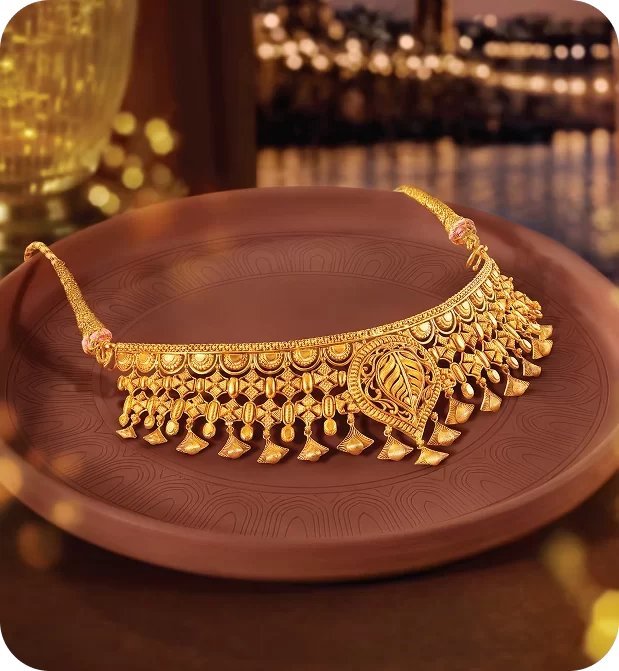
Aagomon, Tanishq’s new Durga Puja collection, begins here, in the arches and carvings that have quietly shaped Bengali taste for generations, long before any of it found its way into gold.
What a Rajbari Was Built to Say
A Rajbari was never simply a residence. Its architecture reflected the history, craftsmanship and sensibility of the family that built it.
Arches framed entrances and courtyards. Stucco details brought texture to walls and ceilings. Carvings added intricacy to spaces that could otherwise have been simple. Even the smallest elements contributed to the character of the whole.
Walk through any old Rajbari today and this is still visible. Arches frame doorway after doorway, courtyard after courtyard, and each one marks a transition, the point where one room, one moment, gives way to the next.
It is this attention to detail that makes Rajbari architecture so distinctive. The grandeur comes not only from its scale, but from the way individual elements come together.

Translating Architecture into Ornament
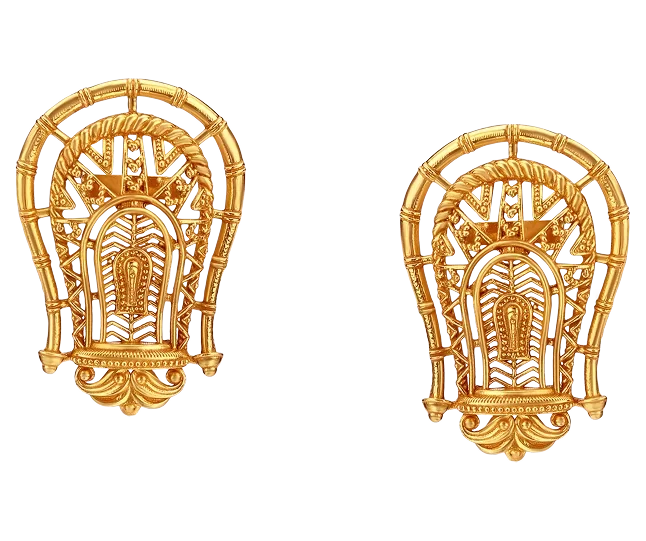
This is the Rajbari design language Aagomon draws from. Rather than illustrating a Rajbari, the collection looks at the forms, proportions and details that make the architecture recognisable and translates them into jewellery.
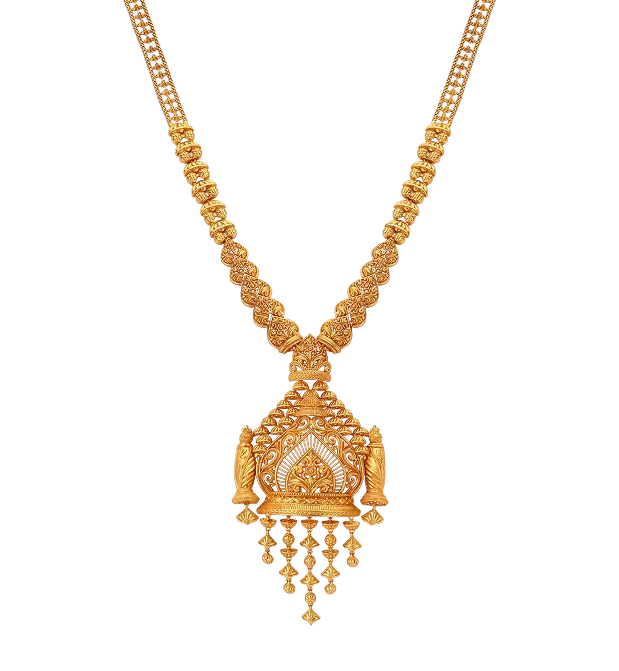
The curve of an arch becomes the outline of a pendant. The rhythm of carved details can find expression along a choker. The layered form of a chandelier can inspire the movement of an earring.
The result is not a miniature version of Bengal’s architecture. It is an interpretation of it, where architectural forms become details that can be worn and experienced differently.
Craft That Remembers Where It Came From
Drawing from heritage does not mean recreating it exactly as it was.
Aagomon takes familiar elements from Bengal’s architectural landscape and gives them a place in contemporary jewellery. The inspiration comes from Rajbari design, but the pieces are designed for the woman wearing them today, with modern sarees, contemporary silhouettes and her own way of styling them.
The inspiration remains recognisable without feeling tied to a particular era.
The Rajbari becomes the starting point. The woman wearing the jewellery gives it its present-day expression.
A Design Story Worth Wearing
What makes Aagomon’s inspiration interesting is the journey from something monumental to something personal.
An arch that once framed a grand entrance can become a curve around the neckline. A detail carved into a wall can become something held close. Architecture that was once experienced as part of a larger space can become part of an individual’s Pujo look.
This is where Bengal’s architectural heritage meets jewellery, not as a reproduction, but as a new way of experiencing familiar forms.
This Pujo, Aagomon by Tanishq brings the arches, carvings and quiet artistry of Bengal’s Rajbaris into jewellery, carrying a piece of that architectural story into the present.