 GET THE APP


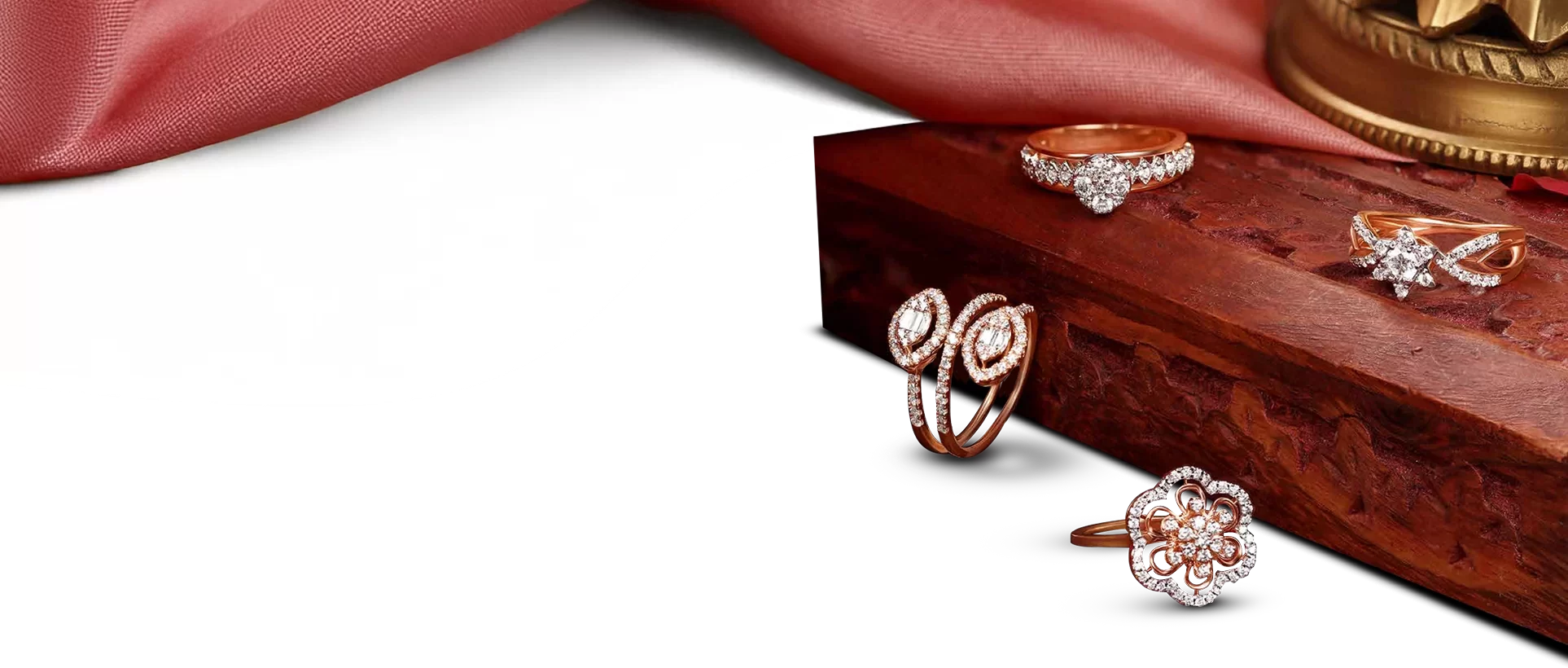
“How to identify a real diamond” is one of the most searched jewellery questions, and for a good reason. With diamond alternatives becoming increasingly convincing, knowing how to check real diamond authenticity helps you protect both emotion and investment. In simple terms: a real diamond has unmatched brilliance, durability and geological integrity that imitations cannot fully replicate.
Identifying a real diamond doesn’t always require expensive equipment or gemologist certification. Several reliable at-home tests can help you assess whether a stone is likely genuine when you’re shopping for unique diamond rings or other diamond jewellery. These methods focus on diamond’s unique physical properties: extreme hardness, high refractive index, thermal conductivity and density, which most imitations can’t replicate.
This guide walks you through practical at-home checks, professional indicators and the nuances that separate a genuine stone from lookalikes.
What Makes a Diamond “Real”?
A real diamond is a naturally occurring gemstone made of pure carbon, formed under extreme heat and pressure deep within the Earth over billions of years. Three physical properties set it apart from every imitation:
- Hardness: 10 on the Mohs scale. The hardest naturally occurring substance. Nothing scratches a diamond except another diamond.
- Refractive index: 2.42. Light bends dramatically upon entering, creating the intense brilliance and fire that is uniquely that of a diamond.
- Thermal conductivity: Exceptionally high. A real diamond disperses heat almost instantly. Most imitations retain it.
When people ask how can you identify a diamond, they’re really asking how to recognise these inherent qualities that no imitation fully matches. Most diamond simulants, such as cubic zirconia, moissanite, and white sapphire, mimic appearance but fail when tested against the traits of natural diamonds. How to identify original diamond comes down to exploiting these differences.
How to Tell if a Diamond is Real?
When you’re confused about how to identify real diamond, there are certain tests to help you. These tests don’t replace professional evaluation, but they help you understand how to identify original diamond characteristics with confidence.
Visual Inspection
- Hold the stone under good lighting and examine the facets closely.
- Real diamonds often have natural inclusions: tiny crystals, needles, or growth lines visible under magnification.
- Perfect clarity with no inclusions at all can indicate an imitation. Flawless natural diamonds exist but are rare and expensive.
- Look at the edges of facets. Real diamonds have sharp, precise edges. Imitations tend to show softer or worn facet edges.
- Genuine diamonds typically face up whiter and brighter than imitations in equivalent lighting.
Sparkle and Light Play
- Move the stone under a direct light source and observe the reflection.
- Real diamonds reflect white light with sharp, high-contrast flashes, not rainbow-heavy colour. The pattern is crisp and defined.
- Cubic zirconia shows excessive coloured fire. White sapphire looks dull and flat. Moissanite shows a doubling effect in the light pattern.
- Diamonds do not scatter light in soft arcs. Their brilliance is directed and precise.
Fog (Breath) Test
- Breathe directly on the stone.
- A real diamond disperses heat instantly. The fog clears in under one second.
- Cubic zirconia, glass, and most imitations retain fog for 3 to 10 seconds.
Note: This test works best on loose stones or lightly set jewellery. Deeply set stones may behave differently due to metal contact.
Water (Density) Test
- Drop the stone into a glass of water.
- Real diamonds sink immediately. They have a density of 3.52 g/cm³.
- Glass (2.5 g/cm³) floats or sinks slowly. Most simulants are lighter.
Note: Use only on loose, unmounted stones. Do not test jewellery with set stones in this way.
Loupe / Magnification Test
- Use a jeweller’s loupe at 10x magnification.
- Examine the girdle, culet, and interior of the stone.
- Real diamonds show natural inclusions: crystals, needles, pinpoints, or internal graining. These are normal.
- Cubic zirconia often shows mould lines and rounded girdle edges.
- Moissanite shows internal doubling of facet edges under magnification. This is one of the most reliable ways to distinguish moissanite from diamond.
- Gas bubbles inside a stone indicate glass. Real diamonds never contain gas bubbles.
Newspaper / Dot Test
- Place the stone table down on printed text or a drawn dot.
- If you can read the letters or see the dot through the stone, it is very likely not a real diamond.
- Real diamonds refract light so completely that text becomes illegible when viewed through the stone.
Note: This test is most reliable on loose stones with flat tables. Fancy-cut or mounted stones may give variable results.
Scratch / Hardness Test
- Diamonds scratch glass and ceramic. Nothing scratches a diamond except another diamond.
- Drag the stone across a ceramic tile or a piece of glass and look for a mark.
- A real diamond leaves a permanent scratch. Glass and most simulants do not.
Caution: This test risks damaging the stone, the tile, or the surrounding metalwork. Use only on loose, unmounted stones. Note that moissanite (9.25 Mohs) will also scratch glass, so this test alone does not distinguish diamond from moissanite.
UV / Black Light Test
- Hold the stone under a UV lamp or black light in a darkened room.
- Approximately 25 to 35 per cent of real diamonds emit a blue glow under UV. This is called fluorescence.
- Cubic zirconia typically fluoresces orange or yellow. Moissanite shows a weak green glow.
- Absence of fluorescence does not indicate a fake. Many genuine diamonds show no UV response at all. Use this as supplementary information only.
Heat Resistance Test
- Real diamonds conduct heat with exceptional speed.
- Hold the stone loosely in your palm for a few seconds. A genuine stone feels cool initially and disperses warmth quickly. Glass warms immediately.
Note: This is a low-reliability test at home. A professional thermal conductivity probe is far more accurate.
Magnet Test
- Hold a strong neodymium magnet near the stone.
- Real diamonds show no magnetic attraction. They are non-magnetic carbon.
- Some poorly made imitations or stones with metallic inclusions may react.
- This test rules out certain fakes but cannot confirm authenticity on its own.
At-a-Glance: Test Summary
Test |
How To Do It |
What a Real Diamond Does |
Reliability |
|---|---|---|---|
|
Fog Test |
Breathe on the stone |
Fog clears in under 1 second |
Moderate (best on loose stones) |
|
Water Test |
Drop a loose stone in water |
Sinks immediately |
Moderate (loose stones only) |
|
Newspaper Test |
Place face down on the text |
Letters are invisible |
Good for loose stones |
|
Loupe Test |
Examine at 10x magnification |
Natural inclusions; sharp facet edges |
Very good |
|
UV Test |
Hold under black light |
Blue glow in many (not all) real diamonds |
Supplementary only |
|
Magnet Test |
Use neodymium magnet |
No magnetic reaction |
Good (rules out some fakes) |
|
Heat Test |
Feel the temperature in your hand |
Feels cool; disperses heat quickly |
Low (use only as a secondary check) |
Real Diamonds, Crafted by Tanishq
The confidence of owning a real diamond is inseparable from the confidence in where it comes from. Tanishq’s diamond collections are entirely composed of certified natural diamonds, each with a GIA or IGI grading report. Below are the two best pieces from the current collection:
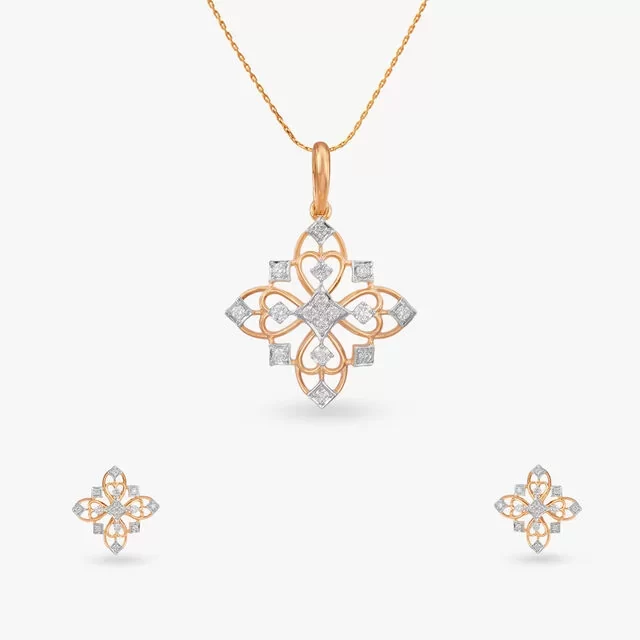
Sparkling Heritage Diamond Pendant and Earrings Set
Crafted in 18 Karat yellow gold with natural diamonds set in a filigree lattice is designed for wedding celebrations. The floral motifs capture and return light with every movement. A piece that demonstrates precisely why cutting and setting are inseparable from a diamond’s brilliance.
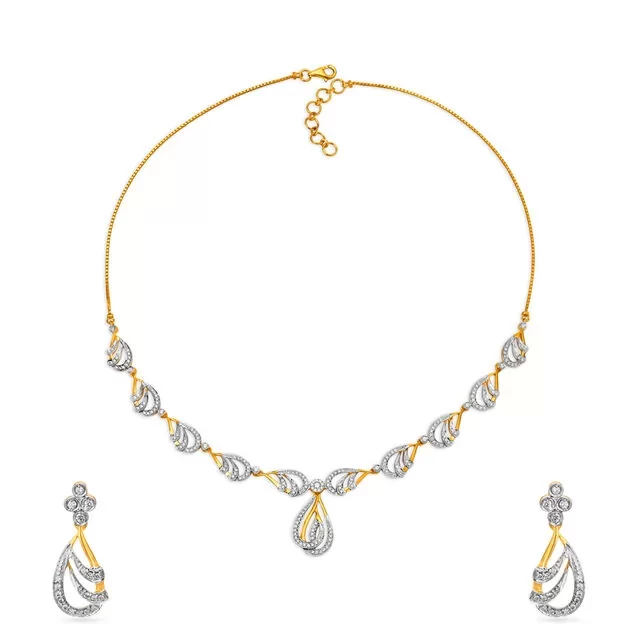
Alluring Diamond Necklace Set and Teardrop Earrings
An 18 Karat yellow gold necklace set with SI2 clarity natural diamonds. The teardrop earring design allows maximum light entry from multiple angles, making this an ideal piece for understanding how real diamond brilliance performs against imitations. What you see in a certified stone is precisely what a simulant cannot replicate.
Common Diamond Imitations & How They Differ
Several materials are designed to visually mimic a real diamond. Each has specific physical differences that become apparent under testing.
Imitation |
Key Differences from a Real Diamond |
Tests It Fails |
|---|---|---|
|
Cubic Zirconia (CZ) |
Excessive rainbow fire; rounded facets; softer (8.5 Mohs); heavier than diamond |
Fog test (fog lingers 10+ sec); newspaper test (letters visible); loupe (mould marks) |
|
Moissanite |
Double refraction creates visual doubling; near-equal hardness (9.25 Mohs) |
Loupe test (doubling of facet edges); UV test (green glow vs blue) |
|
White Sapphire |
Low refractive index (1.77); dull, milky appearance; poor light return |
Sparkle test (flat appearance); fog test; water test |
|
Glass |
Bubbles inside; low hardness; poor light return; feels light |
Scratch test (no mark); fog test (slow clearing); density test (floats or sinks slowly) |
|
White Topaz |
Scratches easily; loses lustre quickly; lower refractive index (1.61) |
Loupe (surface scratches); sparkle test (flat vs sharp diamond brilliance) |
Understanding these differences makes it easier to spot a real diamond versus a visually similar substitute, especially in unique diamond rings where craftsmanship amplifies the stone’s character.
Why Diamond Certification Matters
If you’re serious about value and authenticity, certification is non-negotiable. Trusted grading reports verify whether a stone is natural, its cut, clarity, colour and carat weight. This is the most reliable answer to how to check real diamond status beyond surface-level tests.
A certified diamond also holds stronger long-term value and resale credibility.
Home tests narrow possibilities but can’t confirm authenticity definitively. Real diamonds above 0.20ct should carry a reliable certification stating cut, colour, clarity, carat and confirming natural origin. Certification also verifies laser inscriptions, fluorescence patterns and growth characteristics unique to genuine stones. Always request papers for unique diamond rings or investment pieces.
Tanishq Tip:
Visit a DXC (Diamond Expertise Centre), Tanishq’s new initiative, to understand more about the journey and authenticity of the diamond you own.
Professional Evaluation: When to Get It
If the diamond is:
- A major purchase
- An heirloom
- Part of an engagement or milestone piece
…it’s worth getting a professional assessment.
Professional gemologists use tools that go well beyond at-home tests: spectroscopic analysis, thermal conductivity probes, and advanced magnification equipment that can distinguish diamond from moissanite, identify treatments, and confirm natural origin with certainty. Tanishq’s Diamond Expertise Centre Store (DXC) offers exactly this level of evaluation, with specialist guidance and professional instruments available during every consultation. For anyone wanting to understand what is DXC and how it works, it is the clearest expression of Tanishq’s commitment to full transparency in diamond ownership.
Conclusion
Learning how to identify a real diamond isn’t about distrust; it’s about discernment. A genuine diamond reveals itself through light, structure, resilience and provenance. While home tests can offer insight, true assurance lies in certification, craftsmanship and transparency.
When you choose a diamond with knowledge and intent, you’re not just buying sparkle, you’re choosing something rare, enduring and unmistakably real.
Frequently Asked Questions
You can start with simple checks like the fog test, water test and sparkle observation. A real diamond disperses heat instantly, sinks in water and reflects light in sharp white flashes rather than rainbow colours. These tests help you understand how to identify real diamond characteristics, though they are not a substitute for certification.
No. While diamonds are extremely hard, scratch tests can damage both the stone and the surrounding jewellery. They are outdated and not recommended for verifying a real diamond.
Not necessarily. Some real diamonds exhibit blue fluorescence under UV light, while others show no reaction. UV testing alone cannot determine authenticity and should only be used as a supplementary indicator when learning how to identify real diamond stones.