 GET THE APP


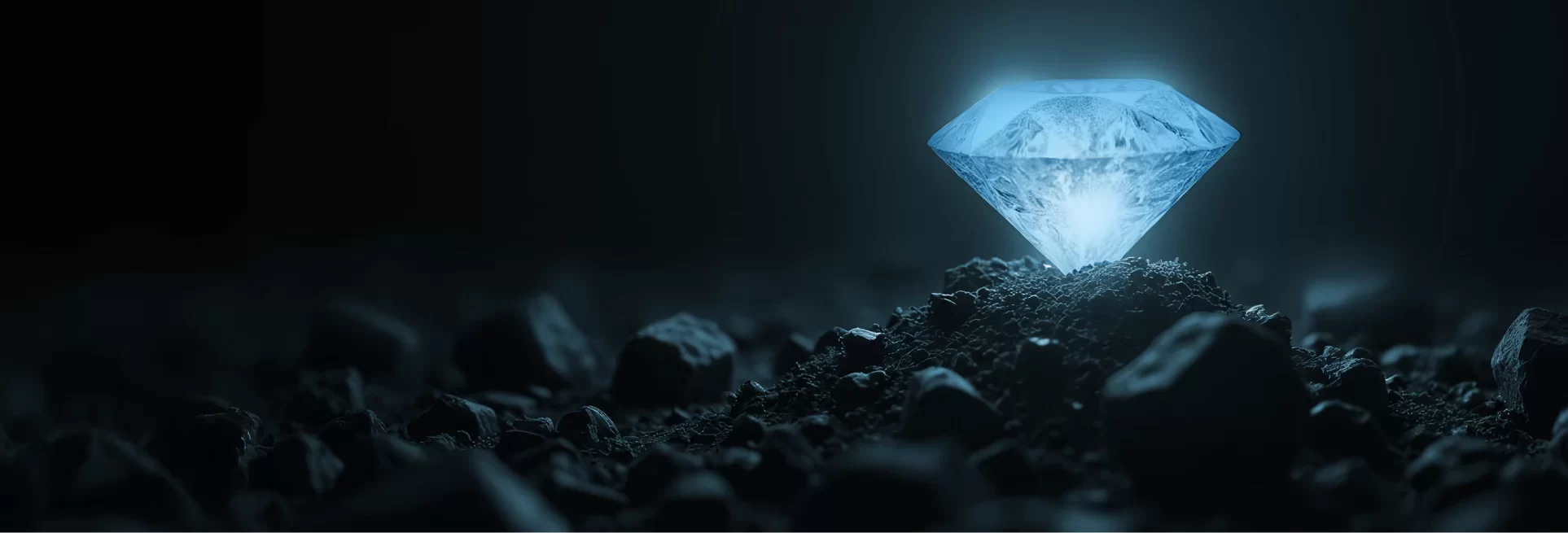
Pick up a real diamond and hold it under sunlight. Most of the time, nothing unusual happens. Occasionally, though, the stone emits a soft glow: a quiet wash of blue, sometimes white, sometimes yellow. That is fluorescence. It surprises some buyers and confuses others. While it is completely natural, it often raises questions such as does it affect sparkle, durability, or the real diamond price?
Fluorescence is one of the most misunderstood characteristics in fine jewellery. Some buyers avoid it entirely. Others seek it out. The reality sits between these positions, and it is simpler than the debate suggests. Whether you are choosing a necklace with real diamonds, a real diamond ring, or a pair of real diamond earrings, understanding fluorescence takes roughly five minutes and can change how you evaluate every stone you consider purchasing.
What Is Diamond Fluorescence?
Diamond fluorescence is a natural optical effect where certain minerals within natural diamonds react to ultraviolet light, causing the stone to emit a soft glow.
This phenomenon develops during the diamond’s formation deep within the Earth over billions of years. It is neither artificial nor a treatment. Around one-third of natural diamonds exhibit some level of fluorescence, while others show none.
Key facts:
Occurs in 10-15% natural diamonds strongly, whereas 15-20% have only faint fluorescence
Most common colour: Blue (90%+)
How Fluorescence Is Graded?
Tanishq diamond certification grades fluorescence on a 5-point scale:
Grade |
Visibility |
UV Reaction |
Effect on Appearance |
|---|---|---|---|
|
None |
No glow |
Completely inert |
Consistent; no colour variation across lighting |
|
Faint |
Barely detectable |
Very subtle blue tint |
No perceptible effect in normal wear |
|
Medium |
Noticeable under UV |
Clear blue glow |
Can brighten faint-colour stones attractively |
|
Strong |
Prominent |
Bright blue; visible in daylight |
Occasional milky appearance in direct sunlight |
|
Very Strong |
Intense |
Vivid glow under UV |
Visible haze in sunlight; rare in fine jewellery |
None-Faint: Preferred by collectors
Medium: Acceptable for most
Strong+: May be priced 5–15% lower than non-fluorescent diamonds; in some high-colour stones, the discount can go up to ~20–25%
How Fluorescence Affects Diamond Appearance?
In most cases, fluorescence does not alter how a diamond looks in everyday environments. However, under specific conditions, it can influence visual perception.
Daylight Effect:
- Faint-Medium blue: Enhances faint colour grades (J-K look whiter)
- Strong blue: May create milky/oily appearance in sunlight
- Yellow fluorescence: Rare, usually dulls stone
Evening Effect: Completely invisible under incandescent/LED lighting.
When purchasing jewellery such as a real diamond ring for men or a necklace with real diamonds, experts typically prioritise cut quality first, as it remains the biggest contributor to brilliance and sparkle.
Tanishq Diamond Recommendations
Infinite Spark Solitaire Ring
The Infinite Spark Solitaire Ring showcases a Hearts & Arrows cut solitaire, a precision-cut variation of the round brilliant diamond known for its exceptional symmetry and light performance. Its elegant design keeps the focus on the centre stone, allowing its brilliance and fire to take centre stage. For those seeking a timeless engagement ring with remarkable sparkle, this design beautifully highlights the appeal of a brilliant-cut diamond.
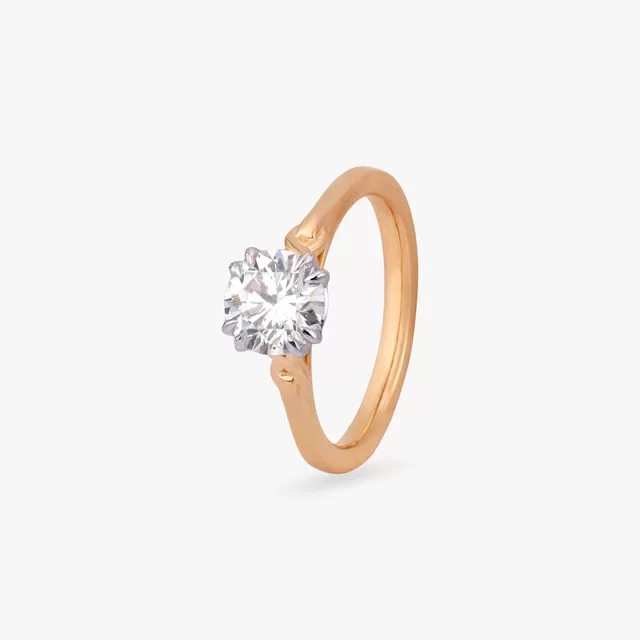
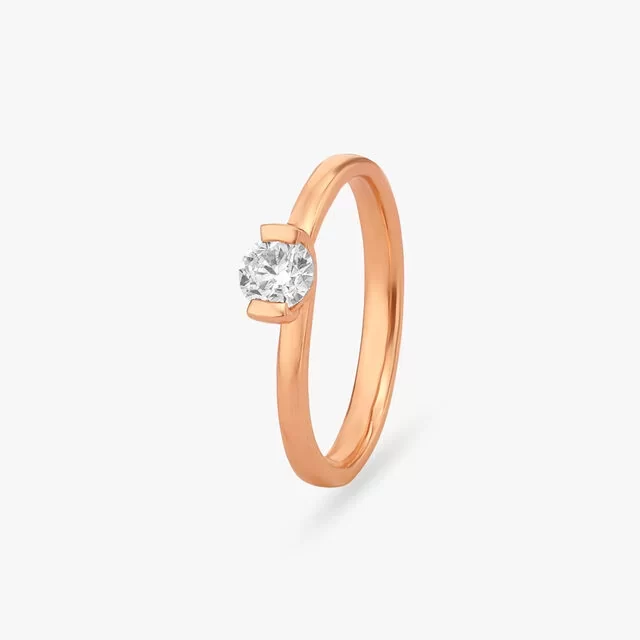
Radiating Perfection Solitaire Ring
The Radiating Perfection Solitaire Ring pairs a Hearts & Arrows solitaire with a refined contemporary setting, creating a design that celebrates light from every angle. Its carefully crafted proportions enhance the brilliance and scintillation that make round brilliant diamonds so desirable for engagement jewellery.
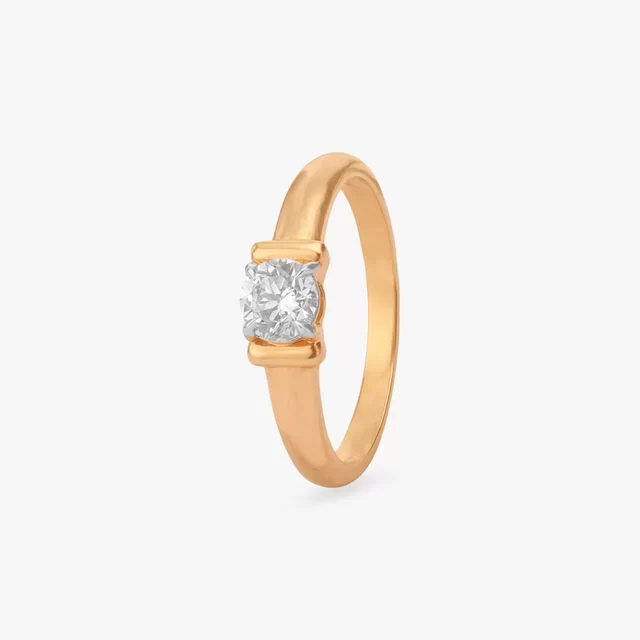
Timeless Charm Solitaire Ring
Elegant and classic, the Timeless Charm Solitaire Ring features a round solitaire diamond in a traditional prong setting that maximises light exposure. The design demonstrates why the round brilliant cut remains one of the most enduring choices for engagement rings, offering beauty, versatility, and exceptional sparkle.
Pros and Cons of Diamond Fluorescence
Fluorescence Level |
Advantages |
Considerations |
Best Suited For |
|---|---|---|---|
|
None |
Neutral, predictable appearance across all lighting |
Carries a slight premium over fluorescent grades |
Collectors, investment buyers, D-F colour preference |
|
Faint |
No perceptible effect; often a marginally lower price |
None significant |
All buyers, excellent everyday choice |
|
Medium Blue |
Visually brightens I, J, and K colour grades |
Slight blue cast under UV-rich environments |
Best value for near-colourless to faint colour stones |
|
Strong Blue |
Meaningfully lower price than the non-fluorescent equivalent |
Risk of milky appearance in direct sunlight |
Buyers who evaluate the specific stone in daylight first |
|
Very Strong |
Deep price reduction |
Visible haze in sunlight; not suited to all settings |
Only where a specific stone is evaluated and approved in all light |
Should You Choose a Diamond with Fluorescence?
Choosing a diamond with fluorescence depends largely on personal preference and visual evaluation. Diamonds with faint or medium fluorescence are widely appreciated and often indistinguishable from non-fluorescent stones in normal lighting. These diamonds can be excellent choices for jewellery pieces such as a real diamond earring or a necklace with real diamonds.
For buyers drawn to jewellery designs like natural uncut diamonds, fluorescence may enhance the stone’s story and geological authenticity.
Tanishq Tip:
The best approach is to view the diamond under multiple lighting conditions and consult experts who can explain how fluorescence interacts with colour and cut.
Is There a Diamond Fluorescence Grade?
Yes. Diamond fluorescence is a formally graded characteristic recorded on every GIA and IGI diamond grading report. It appears in its own section of the report, separate from the 4 Cs, and is graded as None, Faint, Medium, Strong, or Very Strong. The grade is assigned by examining the stone under a calibrated longwave UV lamp in a controlled dark environment. The intensity and colour of the glow are assessed against standardised reference stones.
The fluorescence section of a diamond grading report also records the colour of the fluorescence when relevant, typically Blue for the vast majority of fluorescent stones. This allows buyers to distinguish between Blue fluorescence (the most common and best-studied) and rarer colours like yellow or orange, which behave differently and require individual assessment.
When you visit a Tanishq Diamond Expertise Centre Store, the fluorescence grade of any stone under consideration is explained in practical terms alongside a physical demonstration. You are shown the stone under UV light, and any visible effect is assessed against the same stone in natural daylight. Just simply visit Tanishq diamond DXC! This is the most reliable way to understand what the grade means for that specific diamond.
How Fluorescence Interacts with a Diamond’s Other Qualities
Fluorescence does not exist in isolation. Its effect changes depending on the stone’s colour grade, cut quality, and clarity. Understanding these interactions prevents over-generalisation.
Fluorescence and colour
The interaction between fluorescence and colour grade is the most practically significant. Blue fluorescence counteracts warm tints in lower colour diamonds. A J colour diamond with Medium Blue fluorescence may appear slightly whiter in daylight, in some cases appearing up to one colour grade higher.
Fluorescence and cut
Cut quality is unaffected by fluorescence. An Excellent cut diamond with Strong Blue fluorescence will still exhibit superior light performance in all standard indoor environments. The fluorescence effect only manifests under UV-rich daylight. In all other conditions, the cut’s performance dominates entirely.
Fluorescence and clarity
Inclusions and fluorescence are separate characteristics. A high-clarity diamond is not made hazy by fluorescence, and a lower clarity diamond does not benefit visually from it. The haze associated with strong fluorescence is a property of the whole stone under UV, not of specific internal features.
Fluorescence in natural diamonds vs other stones
In natural diamonds, fluorescence is notable because it can affect a stone chosen primarily for its colourless appearance. In coloured gemstones, fluorescence is typically a neutral characteristic.
Diamond Fluorescence: Myths vs. Facts
The Myth |
The Fact |
|---|---|
|
Fluorescence makes a diamond artificial or treated |
Fluorescence is entirely natural. It forms during the diamond’s creation in the Earth’s mantle and is not added, induced, or altered. |
|
All fluorescent diamonds look blue in daylight |
Only diamonds with Strong or Very Strong fluorescence risk a milky or bluish cast. Faint and Medium grades are invisible in most lighting conditions. |
|
Fluorescence reduces sparkle |
Fluorescence and sparkle are unrelated. Sparkle is a function of cut quality. Fluorescence is an optical response to UV light, not to visible light. |
|
You should always avoid fluorescence |
Faint and Medium Blue fluorescence is widely accepted and, in some cases, enhances the visual appearance of lower colour diamonds. |
|
Fluorescence can be added or removed |
It cannot. Fluorescence is a permanent characteristic formed at the atomic level during the diamond’s natural growth over millions of years. |
|
Fluorescence makes a diamond cheaper, so it is inferior |
Fluorescence is a price variable, not a quality defect. A Faint fluorescent stone of identical cut, colour, and clarity is visually equivalent to a non-fluorescent one. |
Conclusion
Diamond fluorescence is one characteristic among many. It is not a defect, not an enhancement, and not something that demands a universal position of avoidance or preference. For most buyers, Faint fluorescence is not an issue. Medium Blue fluorescence in a near-colourless stone is often a genuine advantage. Strong fluorescence requires individual evaluation. Very Strong fluorescence warrants caution. These are specific, actionable positions, not sweeping rules.
Every real diamond that Tanishq offers is certified and documented. If a stone has fluorescence, that fact appears on its grading report clearly, and our specialists are trained to show you exactly what it means for that specific stone in real conditions.
Frequently Asked Questions
Fluorescence can slightly influence pricing depending on intensity and colour grade. However, the overall beauty of the diamond remains the most important factor for buyers.
Yes, under ultraviolet light, diamond fluorescence can create a soft blue glow. In normal indoor lighting, this effect is usually invisible and does not change how a real diamond appears.
Not necessarily. Many diamonds with strong fluorescence appear visually stunning. The best decision is made by viewing the diamond personally and understanding how it looks in natural lighting.