 GET THE APP


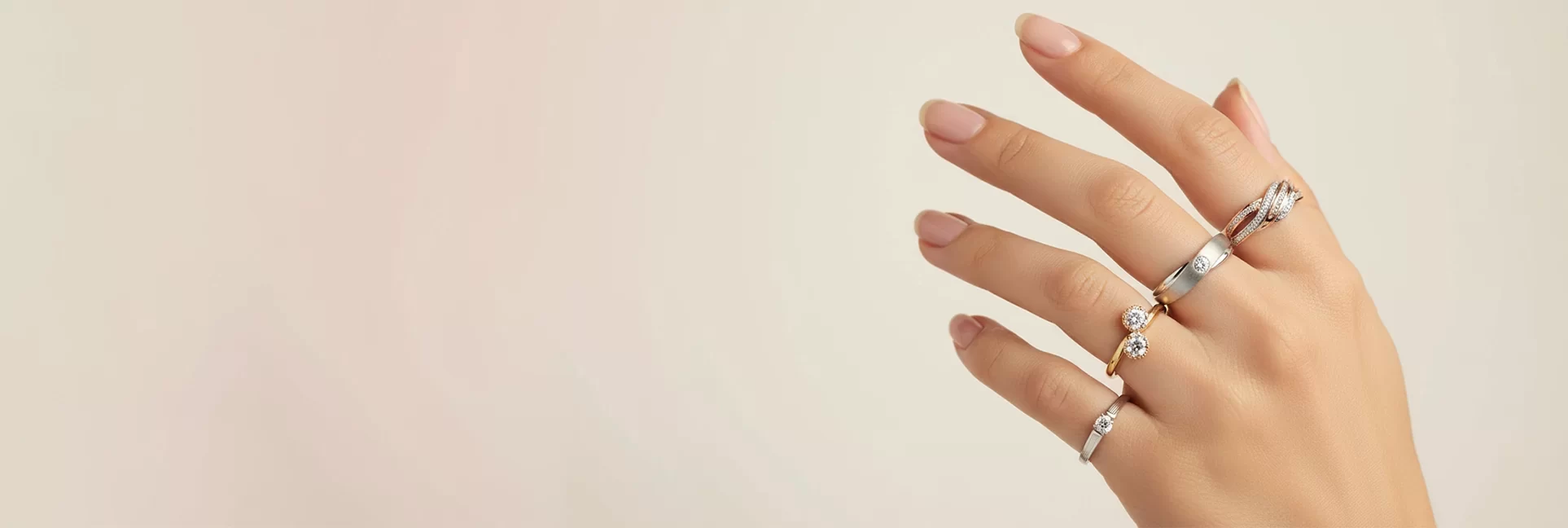
This is one of those questions everyone Googles, but very few people actually talk about out loud. Which engagement ring hand is correct? Is there really a right answer to engagement ring hand and finger etiquette, or is it all tradition dressed up as certainty?
The honest answer: there’s history, there’s culture, and then there’s you. At Tanishq, we see couples choosing meaning over manuals every day. So let’s talk through the traditions, the modern shifts, and how you can decide what feels right, without overthinking it.
Which Finger for Engagement Rings?
Traditionally, engagement rings are worn on the ring finger, the fourth finger, because of the old belief that a vein runs directly from this finger to the heart. Romantic? Absolutely. Scientifically proven? Not quite. But symbolism has a way of sticking.
Today, most people still choose the ring finger because it instantly signals intent. It’s the finger that quietly says “spoken for” without explanation, whether you’re wearing delicate solitaires or more contemporary designs from our diamond engagement rings for women collection.
That said, the right finger is ultimately the one that feels comfortable. Band width, setting height, and lifestyle all play a role.
Tanishq Tip:
Try your ring on different fingers in-store and wear it for a few minutes. Comfort is not a detail, it’s part of commitment.
Engagement Hand for Male & Female: Tradition and Trends
Historically, women wore their engagement rings on the left hand, while men didn’t wear engagement rings at all. That’s changed dramatically. Today, mens engagement rings on hand choices are just as personal and expressive as women’s, and there’s no longer a single rulebook.
For many women, the left hand remains the traditional engagement hand for female, especially in India and Western cultures. But increasingly, people choose based on practicality such as writing hand, work routines, or how often they use their dominant hand.
For men, the engagement hand for male varies widely. Some prefer the left for symmetry with wedding bands, others choose the right as a statement of independence. What matters is that the ring feels intentional, not borrowed from expectation.
Tanishq Tip:
There’s no gendered rule anymore. Choose the hand that fits your rhythm, not someone else’s tradition.
Engagement Rings on Hands Across Cultures
Culture has always shaped jewellery customs. In India, engagement rings are most commonly worn on the left hand, aligning with Western influence. In some European countries, including Germany and Russia, the engagement ring on right hand is more traditional.
In modern global weddings, these distinctions blur beautifully. It’s now common to see engagement rings on hands styled intentionally for photography, rituals or personal symbolism rather than strict custom.
And then there’s the most universal image of all: a couple holding hands with engagement ring visible, announcing a shared future. At that moment, the hand almost doesn’t matter. The connection does.
Tanishq Tip:
If you’re blending cultures, choose one shared meaning rather than trying to honour every rule.
Tips for Choosing the Perfect Finger and Hand
Before you decide, ask yourself a few simple questions. Which hand do you use most? Does your ring design feel balanced on that hand? Will it interfere with daily tasks? A bold band or a heart shape diamond wedding ring might feel better on one finger than another simply because of scale.
Also consider how your engagement ring will sit alongside your wedding band. Some people prefer both rings on the same hand; others like separating them for comfort or symbolism. Designs from our Solitaire Rings collection are crafted to stack comfortably, whichever way you choose.
And remember, nothing is permanent except the commitment itself. Rings can move hands, fingers, even meanings over time.
Tanishq Tip:
The right choice is the one you won’t have to explain, it will simply feel obvious to you.
Make Your Engagement Special with Tanishq’s Engagement Rings
Choosing where to wear your ring is only half the journey. Choosing the ring itself is where intention truly begins.
From elegant diamond engagement rings with refined settings to expressive designs crafted for everyday comfort, Tanishq’s engagement collection is designed to feel lived-in, not just admired. Each piece is made with certified natural diamonds, transparent pricing, and craftsmanship that holds up to real life, not just the proposal moment.
Whether you’re drawn to sculptural modern designs or timeless classics, the right ring will settle into your hand the way it’s meant to.
Frequently Asked Questions
Most people choose the left engagement ring hand, but wearing an engagement ring on right hand is equally acceptable.
The ring finger is traditional, but engagement ring for which finger depends on comfort and design.
Yes, mens engagement rings on hand are increasingly common and worn on either hand.
Of course. Engagement rings on hands can shift as comfort or meaning evolves.
Well-balanced styles like solitaire diamond wedding rings are easiest to wear daily.