 GET THE APP


Introduction
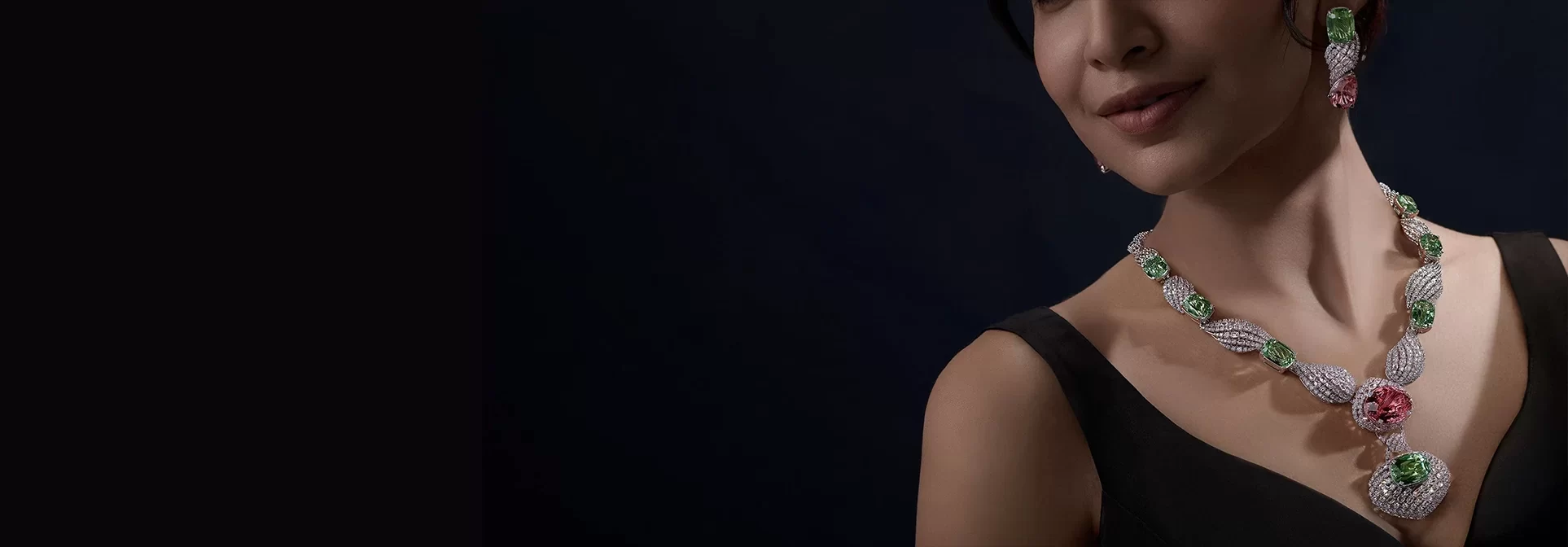
Some gemstones are admired for their brilliance. Others are loved for their rarity. But tourmaline stands apart for its extraordinary spectrum of colour. It is one gemstone that refuses to be defined by a single colour. From deep forest greens and vivid pinks to ocean blues and dramatic blacks, tourmaline exists in more natural shades than almost any other gemstone. No other gem in the world offers quite this range and no two stones are ever quite alike. It’s the kind of gemstone that collectors chase and designers fall in love with, precisely because it surprises you every time.
Today, tourmaline jewellery is increasingly finding its place in contemporary fine jewellery, especially among those drawn to colour-forward pieces that feel distinctive yet wearable. This guide covers everything you need to know about this colourful stone. Let’s dive right in…
What Is Tourmaline and Why Is It Special?
Tourmaline is a complex boron silicate mineral that occurs in a wider range of colours than virtually any other gemstone on earth. What makes this possible is its unusually variable chemical composition: small shifts in the elements present during formation produce dramatically different colours. The same geological family gives you everything from pale pink to inky black, sometimes even multiple colours within the same stone.
Its name is believed to originate from the Sinhalese word turmali, meaning “mixed precious stones”, a fitting description for a gemstone celebrated for its variety. Depending on the colour and cut, it can feel bold and dramatic or soft and understated, making it suitable for everything from statement pieces to everyday jewellery.
Beyond colour, tourmaline also has a few genuinely remarkable properties. It’s one of the few minerals that are naturally piezoelectric and pyroelectric, meaning it generates an electric charge when pressure or heat is applied. Historically, this made it useful in scientific instruments. Today, it makes it one of the more fascinating stones to understand.
Varieties of Tourmaline
The tourmaline family is large and varied. Here are the most significant varieties you’ll encounter:
Rubellite
Often compared to rubies, this type of tourmaline gets its colour due to iron and manganese. Romantic and feminine, it’s one of the most sought-after varieties for contemporary fine jewellery.
Indicolite
Rare and striking, this one is prized for its cool, ocean-like hues, a colour that appears thanks to its rich iron content.
Verdelite
Known for its rich, earthy tones, green tourmaline brings depth and sophistication to rings and pendants.
Watermelon Tourmaline
One of the most distinctive forms of tourmaline, this variety naturally displays both pink and green tones within the same stone.
Paraíba
This is among the most valuable gems in the world. Copper and manganese bring about its distinct and intense blue-green colour.
Siberite
Found in Siberia, this one is known for its deep shade of purple.
Schorl
This is the most abundantly occurring variety of tourmaline and has a long history of use in mourning jewellery and protective talismans across cultures. Dramatic and modern, black tourmaline jewellery has become increasingly popular for bold contemporary styling today.
Bicolour or Multicolour
These are tourmalines that display two or more distinct colours.
Where Does Tourmaline Come From?
Tourmaline is found on nearly every continent, but the finest specimens come from a handful of notable sources:
- Brazil — The world’s most prolific tourmaline producer and the origin of the extraordinary Paraíba tourmaline, discovered in the 1980s.
- Afghanistan & Pakistan — Known for exceptional pink and red rubellites.
- Nigeria & Mozambique — Increasingly significant sources of high-quality coloured tourmalines, including fine indicolites.
- Sri Lanka — Produces a range of colours, with a long history of gem trading.
- India — Deposits exist in Rajasthan and parts of the Northeast, contributing to the domestic gem supply.
What to Look for When Buying Tourmaline Jewellery
When evaluating tourmaline jewellery, four factors matter most:
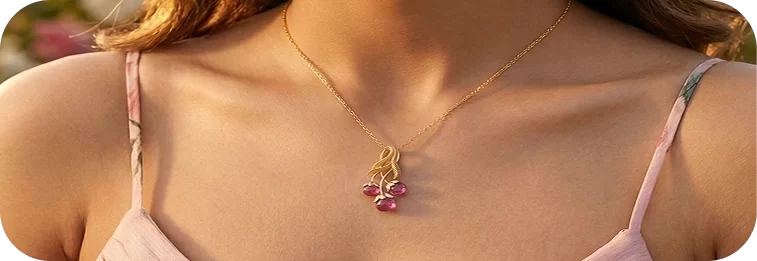
Colour
Colour is the primary driver of tourmaline value. Stones with vivid saturation and even tone without any muddy or washed-out zones are generally considered more desirable.
Clarity
Clarity standards vary by variety. Many tourmalines contain natural inclusions, but cleaner stones are often more valuable, especially in lighter colours.
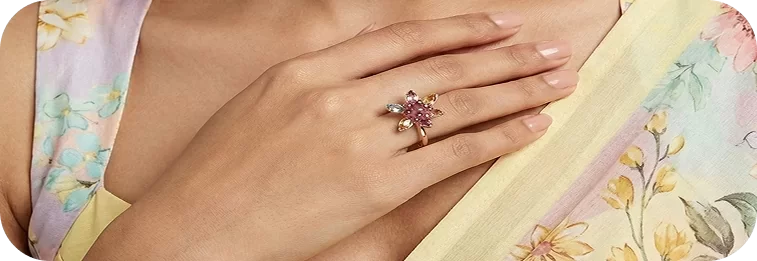
Cut
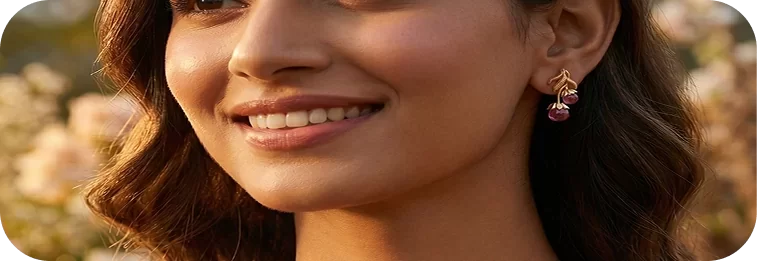
A well-cut tourmaline enhances both colour and light reflection. Elongated cuts are especially common because they complement the gemstone’s natural crystal structure.
Authenticity
Because gemstone treatments and synthetic alternatives exist in the market, transparency matters. At Tanishq, gemstones are sourced with expertise from 100% natural origins.
Tourmaline in Indian Jewellery: How It Is Being Worn
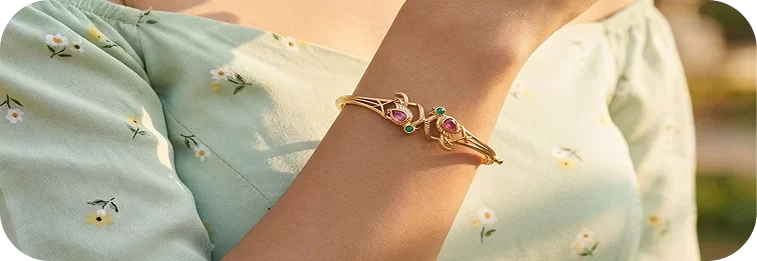
Indian jewellery styling today is increasingly embracing coloured gemstones beyond traditional bridal occasions. Tourmaline’s colour range makes it exceptionally adaptable to Indian jewellery sensibilities, from traditional gold-set designs to contemporary everyday pieces.
Today, tourmalines are being styled in ways that feel modern and wearable:
- Delicate tourmaline earrings paired with everyday silhouettes.
- Statement cocktail rings in vivid pinks and greens.
- Layered chains featuring a minimal tourmaline pendant.
- Sculptural tourmaline necklace designs worn with contemporary Indian wear and western outfits alike.
- Black tourmaline jewellery is being embraced by the younger generations in some bold and unique looks.
This shift reflects a growing preference for jewellery that feels personal and expressive rather than purely occasion-led.
Tourmaline Jewellery Settings and Styling Tips
The setting of a gemstone influences both its appearance and wearability.
- Bezel settings offer a sleek, modern look while protecting the stone.
- Prong settings allow more light to enter the gemstone, enhancing brilliance.
- Halo settings create additional visual impact around coloured stones.
For styling, tourmaline’s strength is also its instruction: lean into colour.
Here are some styling tips:
- Pair vibrant tourmalines with neutral outfits to let the gemstone stand out.
- Mix different coloured gemstones thoughtfully for a layered, contemporary look.
- Choose smaller cuts for everyday elegance and larger stones for occasion dressing.
Because of its colour diversity, tourmaline adapts beautifully across both minimal and statement styling.
How to Care for Tourmaline Jewellery
Tourmaline is durable enough for regular wear, but it still benefits from mindful care.
- Clean gently with warm water, mild soap and a soft brush. Avoid ultrasonic cleaners, which can stress included stones.
- Store separately to prevent scratching from harder gems like sapphire or diamond.
- Avoid prolonged heat exposure. Tourmaline is pyroelectric and can be sensitive to extreme temperature changes.
- Remove before heavy manual activity, swimming or applying perfume and hairspray, which can dull surface lustre over time.
At Tanishq, you get lifetime maintenance on all the gemstone jewellery from our Hues Collection. With routine care, a well-set piece of tourmaline jewellery will hold its colour and brilliance for decades.
Conclusion
Tourmaline’s beauty lies in its individuality. It is one of the most expressive gemstones in modern fine jewellery. It’s a gemstone that works for everyone since it comes in every colour, suits every metal and fits every occasion.
At Tanishq, tourmaline is approached with the same rigour as any precious stone: carefully sourced, expertly cut and set with an understanding of how colour, light and design come together. Whether you’re drawn to a black tourmaline necklace, a delicate tourmaline pendant or a pair of bold tourmaline earrings, the right piece isn’t hard to find. It just has to be the colour that feels like you.
Check out Tanishq’s Hues collection today and choose from pieces that celebrate individuality through colour and craftsmanship.
Frequently Asked Questions
Tourmaline is traditionally classified as a semi-precious gemstone, though some rare varieties can be highly valuable.
Blue and certain neon-toned Paraíba tourmalines are considered among the rarest and most valuable varieties.
Buying from trusted jewellers like Tanishq who provide transparency around gemstone sourcing and quality helps ensure authenticity.
Yes. Black tourmaline jewellery is often chosen for its versatile, contemporary appearance and can work beautifully for regular styling.