 GET THE APP



There are bridal looks you admire and then there are bridal looks you recognise instantly. The Marathi bridal look belongs to the second kind.
It is the unmistakable Marathi bridal look of a Nauvari saree, the Nath framing the face, the Mundavalya resting across the forehead & layers of gold sitting close to the neck. Together, these elements create a distinctive bridal vocabulary, rooted in Maharashtrian tradition while leaving room for the bride to bring her own style to the wedding.
The jewellery is layered, detailed & rich in character, with each piece contributing to the overall expression. As today’s bride curates different moments across her wedding, these traditional forms can take on a more personal expression.
Start with the Nath, because everything else answers to it
The Marathi nath is often the first thing you notice. With its distinctive curved silhouette, pearls and coloured stones, it frames the face and immediately gives the bridal ensemble its Maharashtrian identity.
The Nath also sets the character of the rest of the jewellery. A larger design can take centre stage, while a more delicate Nath leaves room for the necklaces or earrings to make their own statement.
There is another detail that completes this facial frame: the Mundavalya. Traditionally worn across the forehead & secured towards the ears, it is closely associated with the Maharashtrian wedding ceremony and gives the bride that instantly recognisable ceremonial appearance.
Tanishq Tip:
Try your Nath with your complete bridal hairstyle before the wedding. The way it sits can change with the placement of the bun, earrings & hair accessories. A small adjustment can make the entire face feel more balanced.
Where the layering begins
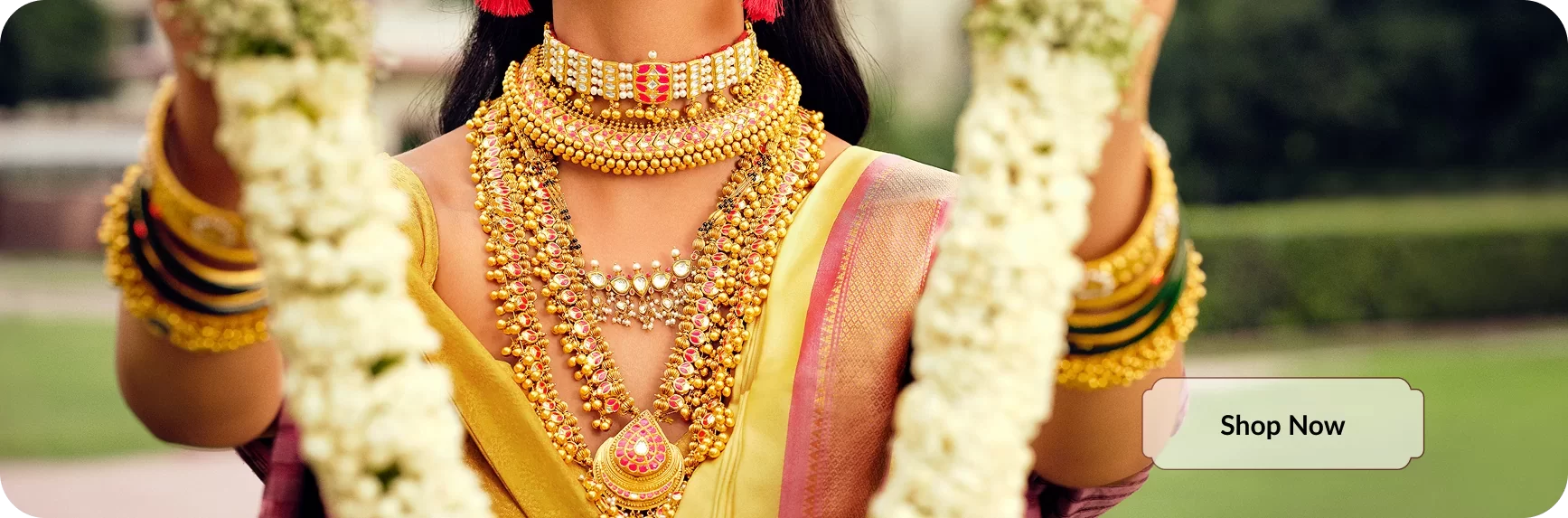
The Marathi trousseau is defined by its layered approach to jewellery. Different pieces bring together structure, texture and movement, creating the richness associated with the bridal look.
- The Chinchpeti sits closest to the neck. Its structured form acts almost like a frame, giving the neckline definition and creating a base for the longer necklaces.
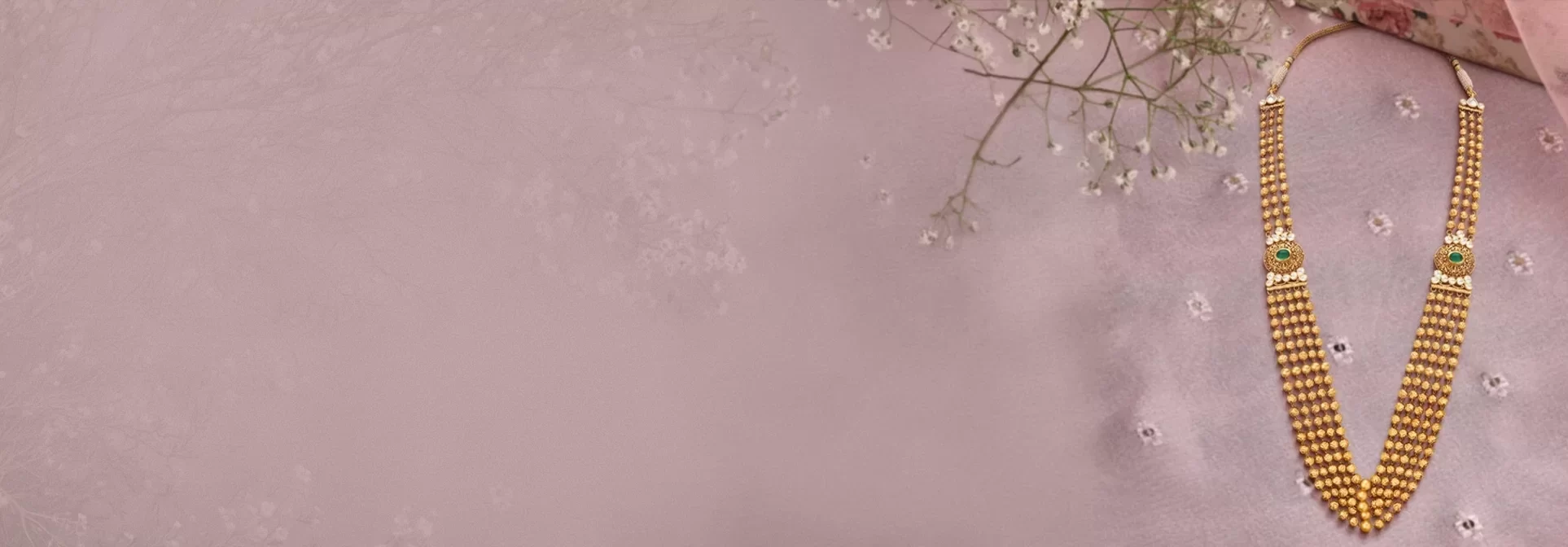
- The Thushi necklace brings texture. Made up of closely set gold beads, it sits snugly around the neck and has a distinctive richness that is easy to recognise even from a distance.
- The Kolhapuri Saaj brings movement and symbolism. Traditionally associated with the Kolhapur region, its multiple pendants create a characteristic cascading effect. Furthermore, the motifs carry associations with protection, blessings & prosperity. It is also one of those pieces that can become a family heirloom – passed down long after the wedding day.
- The Tanmaniya adds another layer of character. Its pearl strands and gold pendant soften the heavier gold forms around it. Its connection with Maharashtrian bridal and married jewellery gives it a significance beyond its appearance.
Together, these pieces create a layered expression without each necklace needing to compete for attention.
A Kolhapuri Saaj brings length and movement, while a Thushi necklace creates a dense texture closer to the neck. The Chinchpeti adds structure to the base. The result is a combination of forms that feels distinctly Maharashtrian.
The blouse and drape also become part of this balance. A simpler neckline allows the layered jewellery to come forward, while a more detailed blouse can be paired with a more considered arrangement.
The Tanmaniya is the piece that stays with you
There is something special about jewellery you know you will wear again.
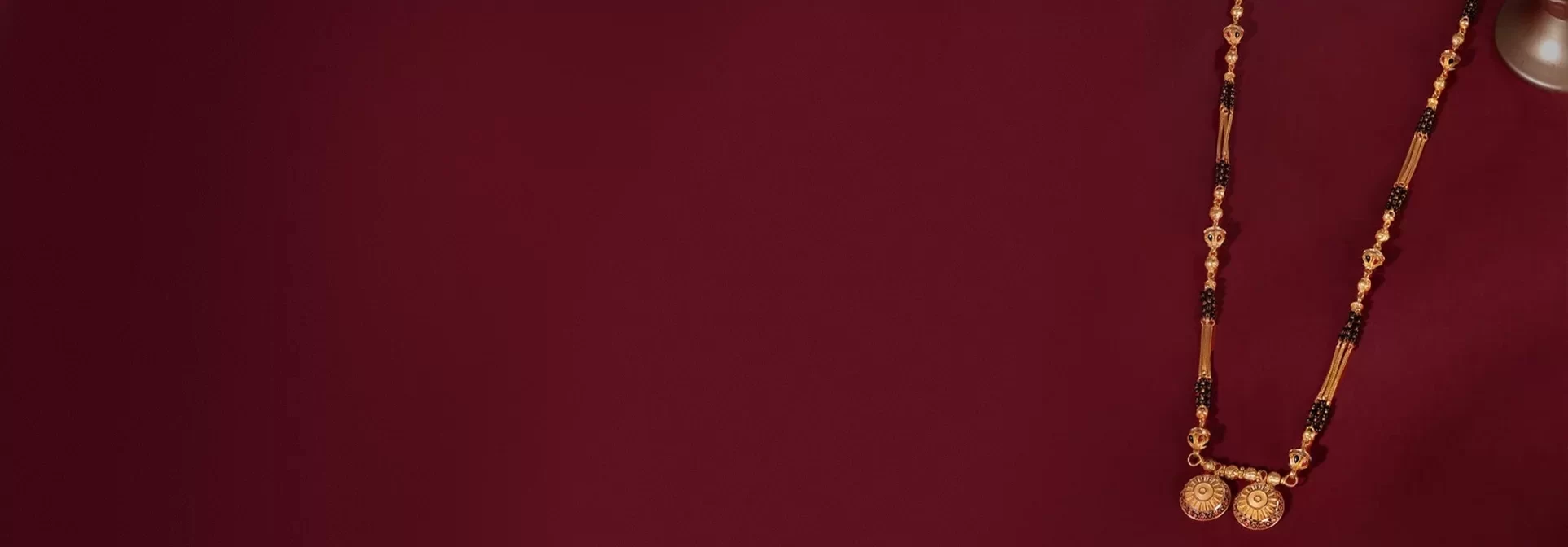
Tanmaniya, the traditional Marathi mangalsutra, is one of those pieces. Its understated design makes it easy to pair with festive sarees, traditional outfits & even simpler everyday looks. Unlike the more elaborate pieces worn for the wedding ceremony, the Tanmaniya naturally finds a place in your wardrobe long after the celebrations.
When choosing your Tanmaniya, think beyond the wedding outfit. Look for a length and weight that will sit comfortably with a saree, kurta or festive ensemble. So it becomes a piece you reach for long after the wedding celebrations are over.
Finish at the ears, arms and hair

The beauty of Maharashtrian jewellery is that the detailing does not stop at the neckline.
A Jhumka adds the familiar movement around the face. On the other hand, an ear cuff can introduce a contemporary edge without taking the look away from its traditional roots. For an even more regional detail, the Bugadi, worn on the upper ear, adds a distinctly Maharashtrian touch that is easy to overlook but instantly elevates the finished look.
Then come the arms.
A Vaki or Bajuband sits on the upper arm and adds structure to the silhouette. Moreover, bangles and kadas bring movement around the wrists. These details matter because they carry the richness of the jewellery story down the length of the bride rather than concentrating everything around her face and neck.
And then there is the Jooda Pin. Tucked into the bridal bun, it is easy to overlook while getting ready. But it adds an important finishing detail when the bride is viewed from behind.
Tanishq Tip:
Finalise your arm & hair jewellery only after deciding the blouse sleeves and hairstyle. The Vaki should sit comfortably on the upper arm without competing with the sleeve. Additionally, the Jooda Pin should complement the bun rather than disappear into it.
How the look moves across the week
A Marathi wedding is not one single celebration. And the jewellery does not need to look the same from one ceremony to the next.
- Haldi: Keep things lighter and comfortable. The Thushi necklace on its own can bring enough gold and texture to create a recognisable Maharashtrian feel without making the look cumbersome.
- Mehendi: This is a good moment to let the smaller details take over. A Jhumka, ear cuff or statement ring can work beautifully alongside the mehendi without overwhelming the hands.
- Lagna: At the Lagna, the complete trousseau comes together. During the Antarpat ceremony and Jaimala, the Nath, layered necklaces, arm jewellery and hair adornments create the full Marathi bridal expression.
- Reception: The Reception allows for a lighter interpretation, with a necklace, earrings and the Tanmaniya retaining the character of the Marathi wedding look in a more relaxed way.
For the bride who wants it Marathi but not traditional
You do not have to remove the pieces that make the look Maharashtrian to make it contemporary. Instead, it is the styling around them that makes the difference.
Keep the Marathi nath and pair it with a more contemporary blouse. Wear the Saaj longer over a simpler drape. Let one traditional piece take centre stage and reduce the number of supporting layers around it.
Scale also changes the character of the Marathi bridal look. Fewer, larger pieces create a more contemporary silhouette, while multiple smaller pieces bring the fullness associated with a traditional bridal expression.
And remember that the trousseau does not have to be worn in its entirety every time. The beauty of these pieces is their versatility. A Saaj can become the hero of one look, while the Thushi or Tanmaniya can take the lead on another occasion.
What you are actually choosing
A Marathi bridal trousseau comes together through the relationship between its pieces. The Nath establishes the character of the face, while the layered necklaces, earrings, arm jewellery & hair adornments build the look around it.
Think about balance too: texture against structure, shorter necklaces against longer ones and heavier pieces against quieter details. Give the Tanmaniya thought beyond the wedding day and do not overlook the Bugadi, Vaki or Jooda Pin. They may be smaller pieces, but they are often what make the finished ensemble feel complete.
For today’s bride, these familiar forms offer a way to stay connected to Maharashtrian tradition while creating a wedding look that feels personal to her.
Tanishq presents the Rivaah Wedding Collection, in store and online.