 GET THE APP


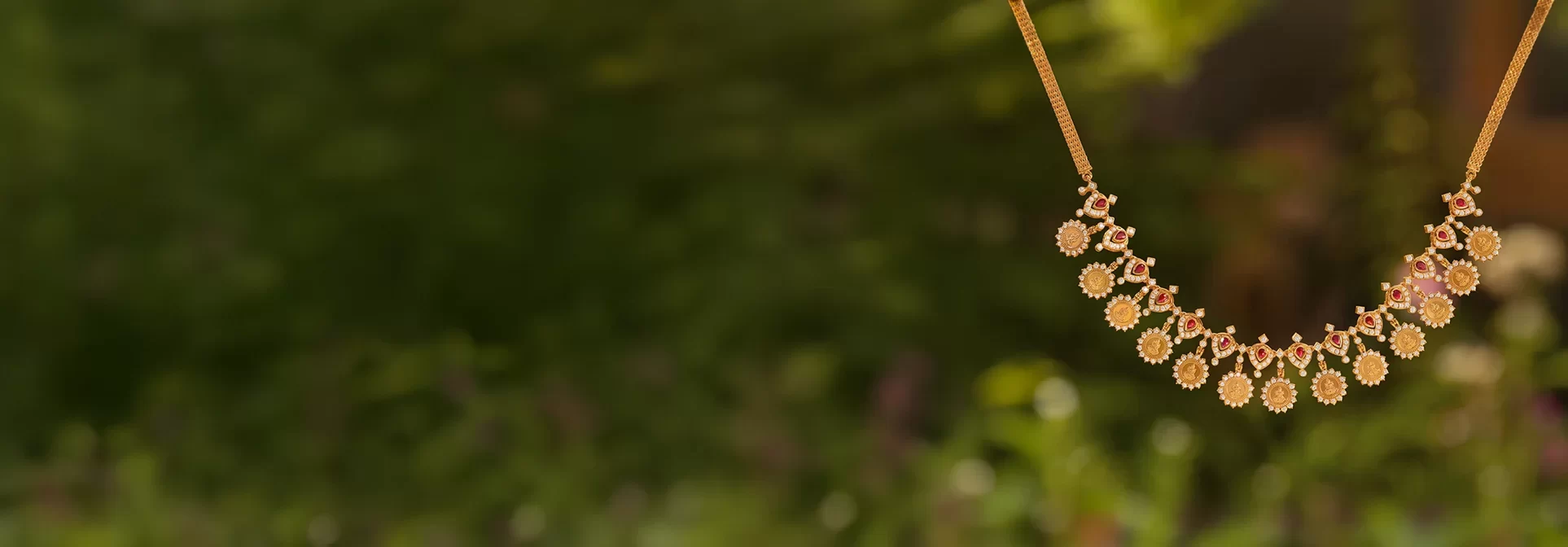
The kasumala (or kasumalai, kasulaperu, kasinasara) is one of the most recognisable South Indian gold necklaces: rows of tiny coins strung together in a gleaming garland. Worn by generations of South Indian women, the kasu mala carries stories of prosperity, protection and celebration. Whether it’s part of a Telugu bridal look, a temple wedding or a festive heirloom brought out once a year, this iconic necklace continues to evolve while staying deeply rooted in tradition. This guide explores what makes the kasu mala gold necklace timeless, how it has adapted to modern tastes and how to choose one that feels personal yet enduring.
What Is a Kasu Mala?
The kasu malai (also spelled kaasu malai) is a traditional South Indian gold necklace made of coin-shaped motifs, often engraved with deities like Goddess Lakshmi. The word “kasu” means coin and “mala” means garland or necklace; together, kasumala literally translates to “coin necklace”. Historically, these coins symbolised wealth and divine blessing, worn not only as jewellery but as a form of portable prosperity.
Over time, the kasu mala necklace became a bridal essential, especially in Tamil and Telugu weddings, signifying abundance, protection and continuity. Today, while its symbolism remains intact, its form has gently evolved to become lighter and more refined to suit contemporary wardrobes.
Types of Kasu Mala Necklace
From ornate bridal heirlooms to minimal festive pieces, kasu mala designs now span a wide aesthetic range:
- Traditional Kasu Mala Necklace
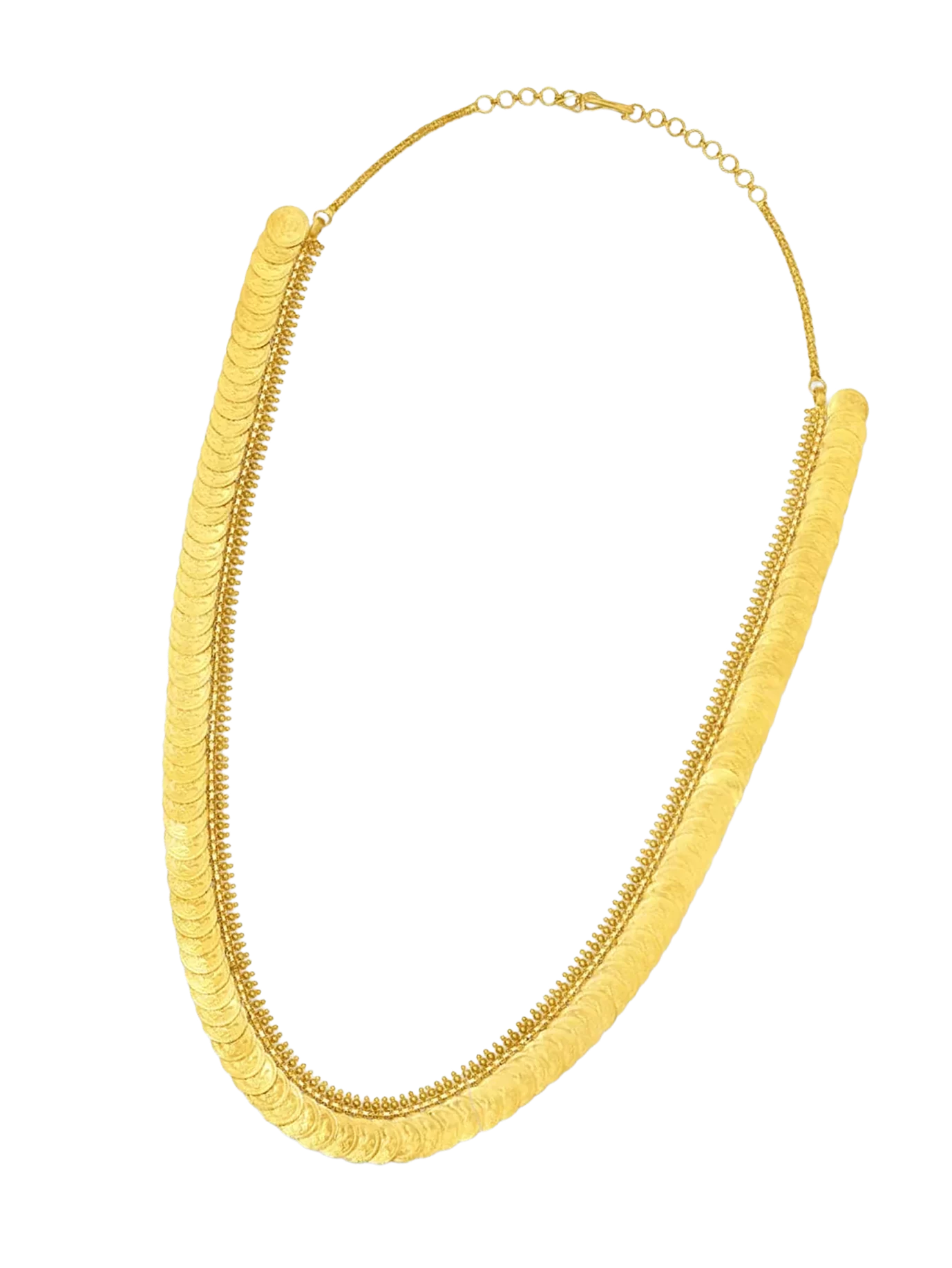
Traditional kasu mala designs feature multiple rows of uniform coins, sometimes combined with a central pendant. They’re usually crafted in 22K gold and worn with silk sarees, temple jewellery and vaddanams, especially for weddings and festivals.
- Simple Kasu Mala Designs
Modern wardrobes favour lighter, simple kasu mala designs featuring single rows of smaller coins, shorter lengths or pared‑back pendants. These simple traditional kasu mala designs work beautifully for poojas, office ethnic days or as a hero piece with minimal earrings.
- Bridal Traditional Kasu Mala Designs
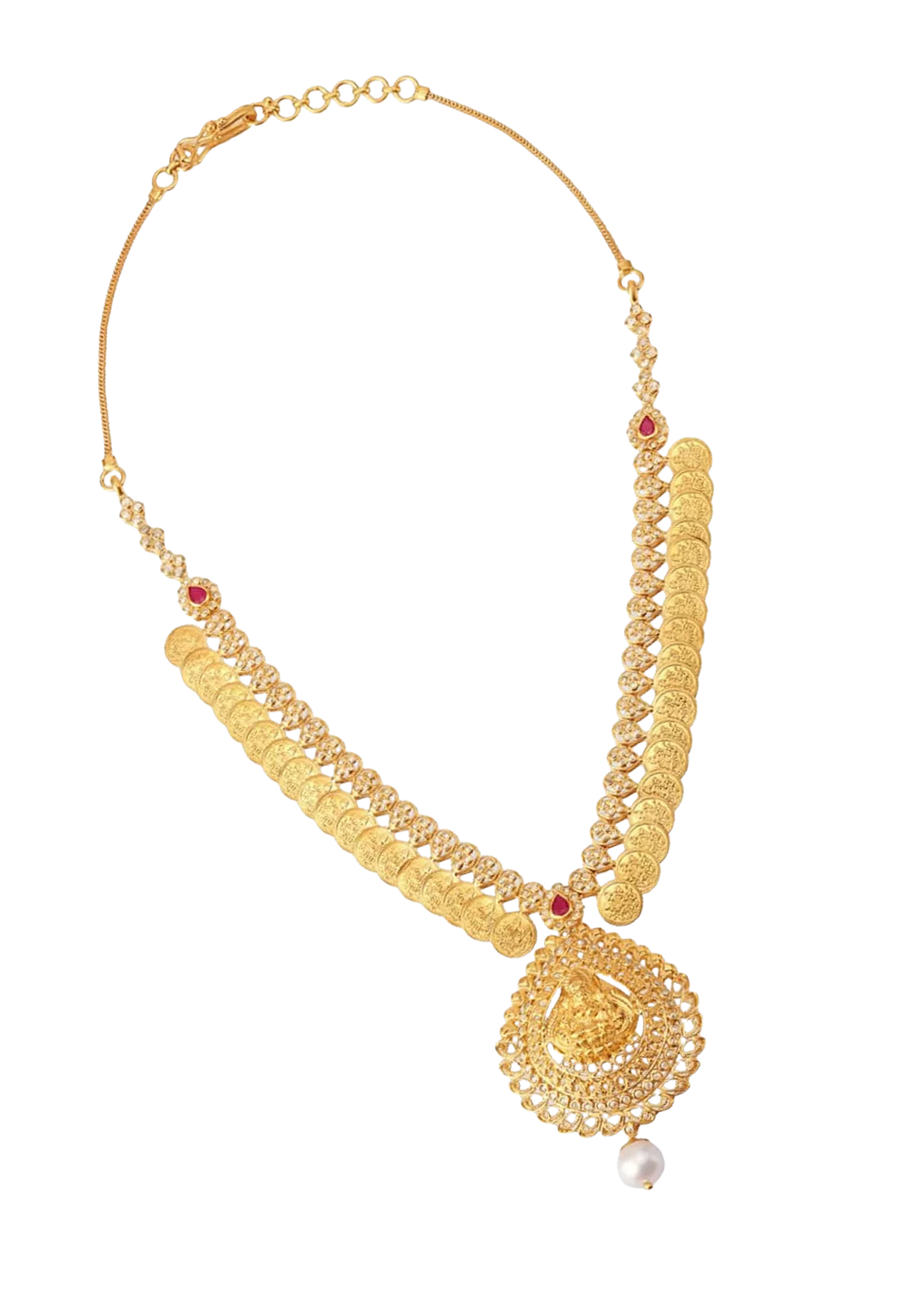
For weddings, layered bridal traditional kasu mala designs often include a short choker‑style strand plus a longer haar length. In a Telugu bridal look, the kasumala or kasulaperu is usually paired with long haars, temple necklaces, vaddanam, jhumkas and maang tikka to create a regal, photo‑ready stack.
- Lakshmi Kasu Mala Gold Designs
A lakshmi kasu mala gold necklace uses coins embossed with Goddess Lakshmi, representing wealth and auspiciousness. These can be single‑row, double‑layer or combined with Lakshmi pendants, making them favourites for muhurtham ceremonies and festive gifting.
- Antique Kasu Mala Designs
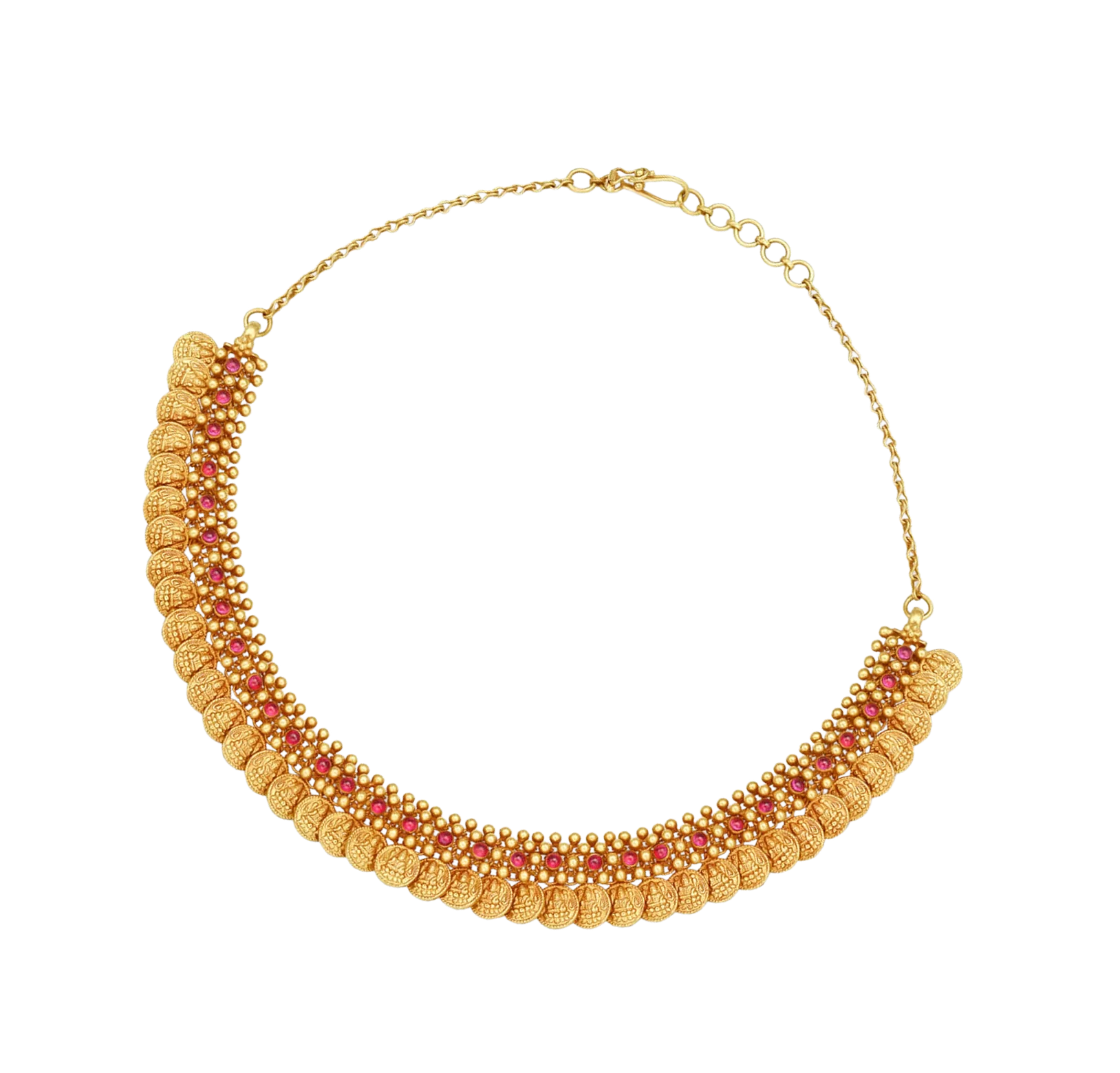
Antique kasu mala designs use matte or “antique” finishes, nakshi work and temple‑inspired motifs for a heritage feel. Pieces often look intentionally aged, echoing vintage temple jewellery, perfect for brides leaning into a traditional, artsy aesthetic.
- Kasu Mala Choker
A kasu mala choker is typically a short, snug necklace where coins hug the base of the neck, sometimes with temple pendants or kundan detailing. This style layers beautifully with longer lengths for a deep, dimensional bridal stack.
Gold Kasu Mala Designs — Modern & Contemporary Styles
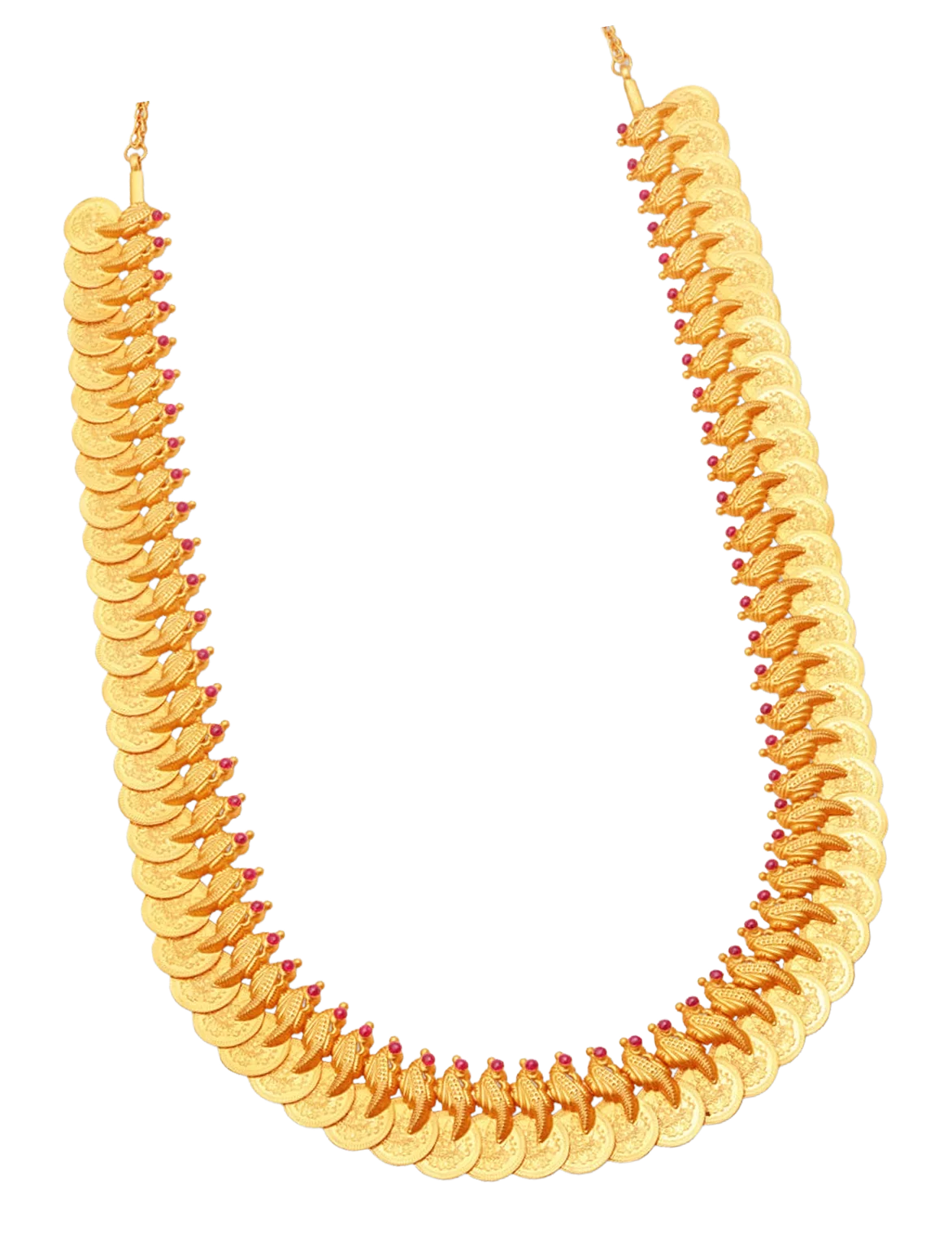
Modern gold kasu mala designs are about balance. Designers are reimagining the form with lighter weights, flexible chains and polished finishes that feel wearable beyond rituals. These styles pair well with silk kurtas, contemporary saree drapes and even fusion wear, proving that heritage jewellery doesn’t have to stay in the locker.
Contemporary gold kasu mala designs experiment with:
- Open‑spaced coins instead of tightly overlapping rows.
- Mixed textures (high‑polish coins with matte links).
- Fusion elements like nakshi‑kundan, gemstone accents, detachable pendants and double‑layer malais that can be worn in multiple ways.
Popular Kasu Mala Designs for Brides
Today’s brides are choosing kasu malas that feel meaningful yet versatile. From simple traditional kasu mala designs for intimate weddings to layered kasu malai gold pieces for grand ceremonies, the focus is shifting towards jewellery that can be restyled long after the wedding photographs are framed.
For brides:
- Single‑layer simple traditional kasu mala designs work for sangeet or engagement.
- Layered bridal traditional kasu mala designs featuring choker plus long mala are reserved for muhurtham or main ceremony.
- Temple‑style lakshmi kasu mala gold designs and antique kasu mala designs pair effortlessly with Kanjeevaram, Pattu or heavy silk sarees, completing a luxurious yet rooted bridal aesthetic.
How to Style a Kasu Mala
For a classic silk‑saree look, style a mid‑length kasu mala necklace with a matching vaddanam and jhumkas.
For layered drama, combine a kasu mala choker with a longer kasu mala gold haar; keep earrings and hair accessories in temple style for cohesion.
To modernise, wear simple kasu mala designs over solid‑coloured blouses or contemporary drapes. Pair with minimal studs rather than elaborate ear cuffs.
For a subtle nod to tradition outside weddings, let a single strand kasumalai be the hero over a plain kurta or linen saree.
How to Choose the Right Kasu Mala
When selecting a kasu mala, consider:
Occasion & use: Reserve heavy, multi‑layer bridal traditional kasu mala designs for weddings; opt for lighter simple kasu mala designs if you want more repeat wear.
Length & layering: Shorter kasu mala choker pieces suit petite frames and high necklines; longer kasu malai gold haars flatter formal bridal drapes.
Motifs & metal finish: Choose lakshmi kasu mala gold designs for auspicious occasions and antique finishes if you love heirloom aesthetics.
Regional styling: For a Telugu bridal look or other traditional bridal ensembles, consider how the kasumala will coordinate with temple jewellery, vaddanam and hair accessories.
Conclusion
The beauty of the kasu mala necklace lies in its ability to hold time within its form. From temple rituals to modern bridal styling, it continues to evolve without losing its soul. Whether you’re drawn to antique kasu mala designs, a refined kasu mala choker or classic traditional kasu mala designs, the right piece will always feel like more than adornment. It will feel like belonging.
At Tanishq, every kasu mala is crafted with transparency, purity and respect for tradition. So what you wear today can be cherished for generations to come.
Frequently Asked Questions
Not at all. While it’s a bridal classic, simple kasu mala designs are increasingly worn for festivals, poojas and family functions.
They refer to the same necklace style; the terms kasu mala and kasumalai are regional variations.
Lighter gold kasu mala designs or chokers can be styled occasionally, but heavier pieces are best reserved for special occasions.
Tanishq offers net weight billing, transparent making charges and over 35 purity checks, ensuring your kasu malai gold piece holds lasting value and trust.