 GET THE APP


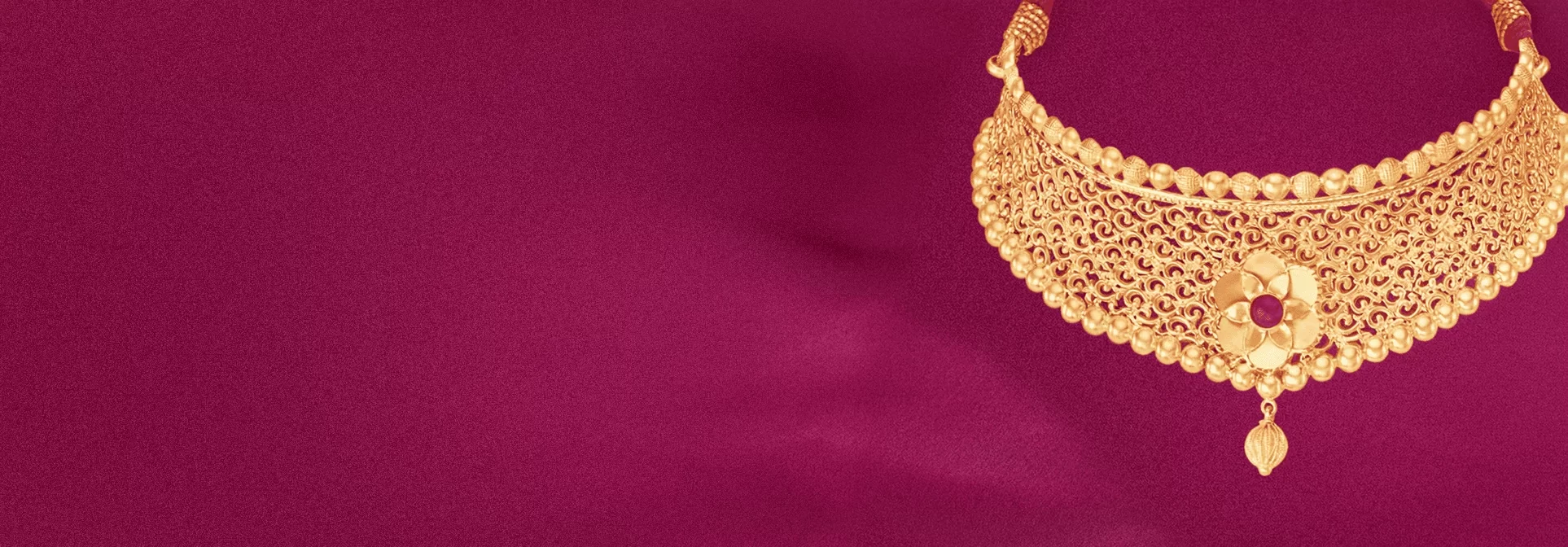
A Gujarati wedding brings together more than rituals & celebrations. There are the familiar sounds of family conversations and the excitement of getting ready. For the bride, jewellery becomes part of these moments.
A Gujarati bride may choose a Chandan Haar for its connection to tradition or a Patla for its place in the bridal trousseau. She can also pick a pair of peacock motifs that carry associations of prosperity & celebration.
Together, these pieces shape a Gujarati bridal look that feels deeply rooted. However, it still leaves room for the bride to interpret tradition in her own way. The details matter too. From ghughroos & Chandrak flowers to Keri motifs & Dodi amulets – each element brings its own character and meaning.
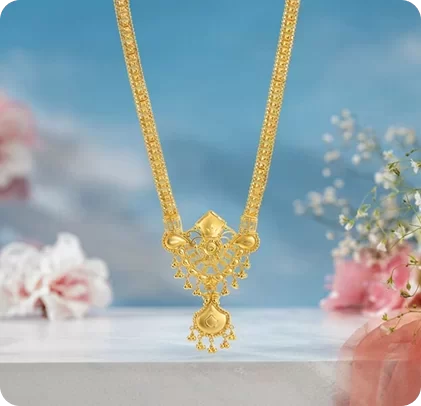
Begin with the Chandan Haar
The Chandan Haar takes inspiration from traditional sandalwood prayer malas. Its understated form brings a sense of elegance to the bridal trousseau. It also carries associations with prosperity & lineage.
Today, Gujarati Chandan Haar designs bring this traditional form into more contemporary expressions. Keri or paisley motifs speak of abundance and continuity, while peacocks bring associations of grace, prosperity and festivity. Paired birds represent the harmony and union of two families.
A Chandan Haar can also become the longer layer in a necklace combination. Pair it with a shorter choker, Guluband or Hasli to create depth and movement through the neckline.
Let Gujarati craftsmanship tell the story
Gujarati jewellery is distinguished not only by its motifs. It is also influenced by the techniques used to create its textures & details.
- Ras-rava brings intricate surface detailing to the pieces.
- Taar-veni uses delicate wire work to create texture and definition.
- Kitkit adds another layer of fine craftsmanship.
- Ghughroos introduce movement and rhythm as the bride moves.
- Chandrak flowers and spring wire work bring delicate detailing to contemporary forms.
- Kundan and rich red gadar enamel add warmth, while carved stones create a more modern contrast.
Heera Ganthan is another distinctive form. Its modular construction represents family bonds and interconnectedness. The same idea of connection runs through several contemporary interpretations of Gujarati jewellery, where individual elements come together to form a larger story.
Build the neckline with different textures
A layered neckline gives the Gujarati bridal look its sense of depth without requiring every piece to look alike.
A traditional Sofa Set choker creates a rounded foundation, with delicate fungars bringing movement and lightness. A tabeez-like amulet at the centre can represent protection, blessings & family heritage. Chandrak Phool motifs and desi ghughri hangings add a playful regional touch.
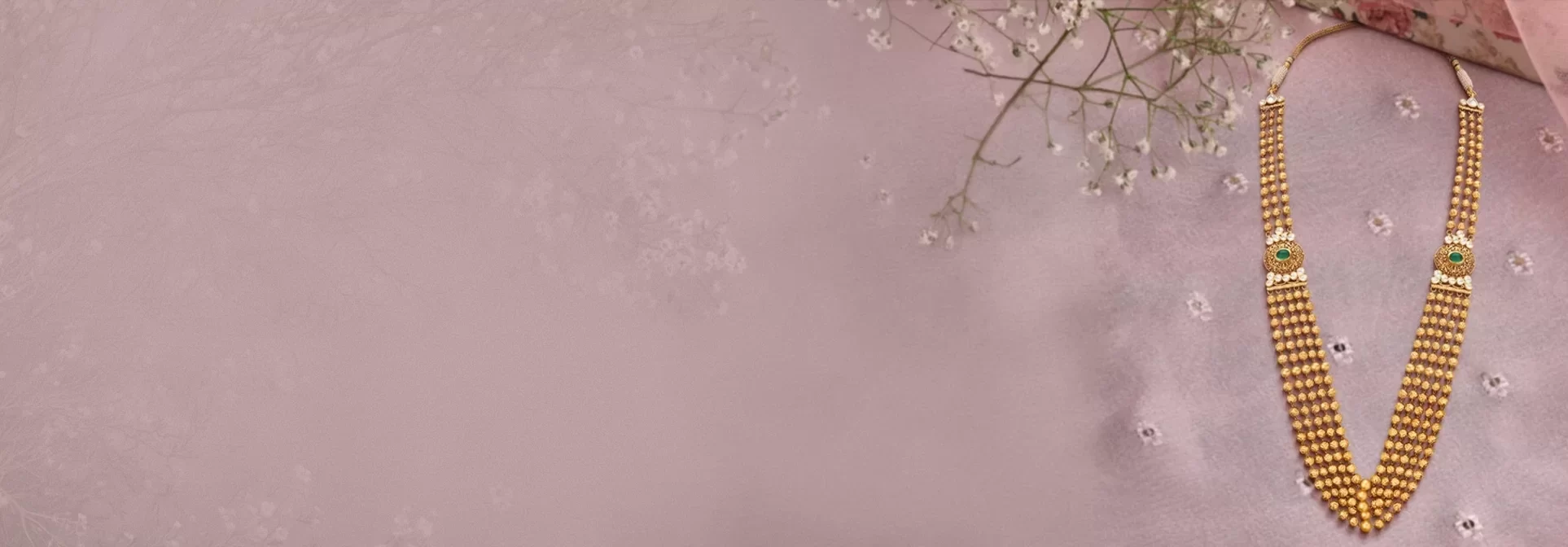
For a longer layer, a four-lada necklace brings together floral forms, Keri motifs, green pattas & traditional Gujarati pipes. Chai patti pearls and green beads can also be used in place of heavier solid-gold elements. This gives the necklace a fresher and lighter expression.
The idea is to bring together different lengths, textures & forms. This is achieved while keeping the overall look balanced.
Choose bangles with character
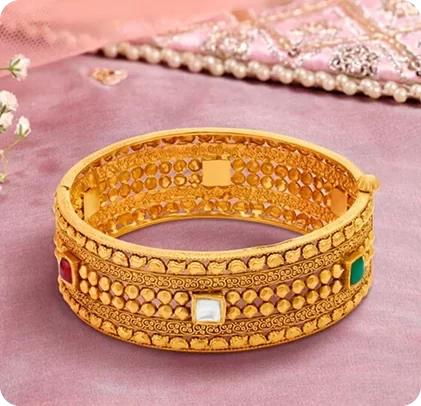
The Patla bangle holds an important place in Gujarati bridal jewellery. Broad and usually worn in pairs, Patlas may feature engraving, repoussé work, Kundan or Meenakari. They are also associated with prosperity and heirloom traditions.
A Patla bangle can be paired with other traditional forms to build a more layered stack:
- Moti Bangdi: Pearl-encrusted bangles that bring softness and are traditionally paired with gold bangles.
- Choodla: A traditional bridal bangle associated with suhaag and traditionally gifted by the bride’s parents.
- Sutarla: Recognised by its rope-like, twisted-wire appearance, with “sutar” meaning thread in Gujarati.
- Ball-Ghughar bangles: Add movement through their playful ball and ghughroo details.
- Gokhru or Gajra: Rounded, voluminous bangles associated with communities across Gujarat.
- Moti Bangdi: Pearl-encrusted bangles that bring softness and are traditionally paired with gold bangles.
Finish the look with the details
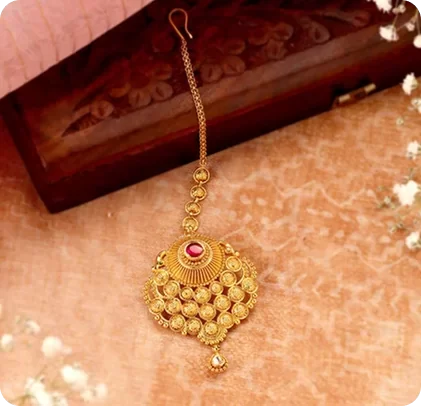
The final pieces frame the bride rather than simply adding more jewellery. A Nath brings focus to the face, while a Maangtika with Matha Patti creates a traditional bridal finish. Hath Poncha extends the jewellery to the hands, with detachable rings and a bracelet offering versatility.
Tanishq Tip:
Finalise your necklace layers around the blouse neckline. A shorter choker or Guluband can sit neatly with a deeper neckline, while a longer four-lada necklace can balance a higher or more detailed blouse.
A Gujarati bridal look with a contemporary expression
For the modern Gujarati bride, tradition does not have to mean wearing every familiar form together. A Chandan Haar can sit alongside lighter pearl and green-bead layers. Patla bangles can be balanced with playful ghughroo details. Traditional Keri, Mor and Dodi motifs can appear in more contemporary silhouettes.
The result is a trousseau that carries familiar stories of family, prosperity, protection & continuity. It gives the bride space to make those traditions her own. From classic Gujarati Chandan Haar designs to richly crafted bangles and expressive regional motifs, each piece becomes part of a Gujarati bridal look that feels personal to her wedding day.