 GET THE APP


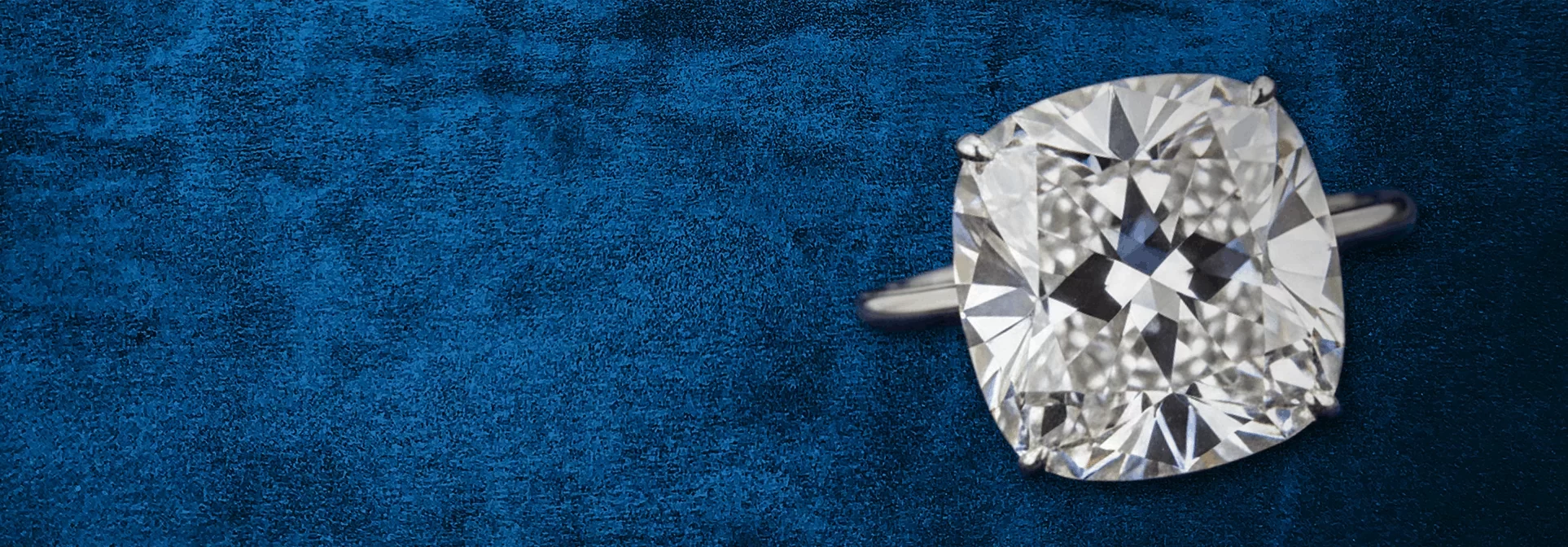
A cushion cut diamond is one of the most romantic diamond shapes ever created, known for its soft corners, pillow-like silhouette and a glow that feels warmer and more expressive than sharper cuts. Loved for its vintage roots yet reimagined for modern tastes, the cushion cut sits at the intersection of old-world charm and contemporary elegance, making it a popular choice for engagement rings, wedding jewellery and statement diamond pieces.
History & Evolution of Cushion Cut Diamonds
The cushion cut dates back over 200 years, originally known as the “old mine cut”. Before advanced cutting technology existed, diamond cutters focused on maximising sparkle under candlelight, resulting in rounded corners, deeper facets and a softer brilliance.
Today’s cushion cut diamond retains that heritage but benefits from modern precision, offering improved symmetry, refined facet patterns and enhanced light performance, without losing its signature romantic appeal.
What Makes Cushion Cut Unique: Light Performance, Aesthetics & Variations
What sets cushion cuts apart is their blend of brilliance and fire. Unlike the sharp sparkle of round diamonds, cushion cuts produce broader flashes of light, a glow that feels richer and more emotive.
Key characteristics:
- Outline: Square or rectangular with soft, rounded corners. Less sharp than a princess, more sculpted than a round.
- Faceting: Usually a brilliant‑style facet pattern (or modified brilliant), giving it lively sparkle with a slightly “softer” look than a round.
- Aesthetic personality: Cushions can look vintage (larger, blocky facets with a “crushed ice” or chunky pattern) or more contemporary (tighter, highly scintillating facets).
Common variations include:
- Standard cushion brilliant
- Cushion modified brilliant (often more “crushed ice” sparkle)
- “Antique” or old‑mine‑style cushions with chunkier facets
This range lets you tailor the look, from romantic and old‑world to highly modern, for everything from cushion cut diamond wedding rings to halo settings and three‑stone designs.
Technical Specifications & Grading
Unlike round brilliants, cushion cuts lack a universally agreed ideal standard, so labs grade overall cut quality more loosely. Key technical elements still matter:
- Proportions: Total depth (% of diameter), table %, crown height and pavilion depth all affect light return.
- Symmetry & polish: Influence the evenness of light and overall crispness.
- Girdle: Thickness affects durability and appearance; extremes should be avoided.
Cushion Cut Diamond – Cut Guide
A well-cut cushion diamond should:
- Reflect light evenly across the surface
- Avoid dark patches (called extinction)
- Maintain a pleasing shape without looking overly stretched
Proportions matter more than numbers here. Always assess brilliance visually when possible.
Cushion Cut Diamond – Length to Width Guide
The length‑to‑width (L:W) ratio determines whether your cushion cut diamond ring appears more square or elongated:
- Square cushions: ~1.00–1.05 L:W (classic pillow look)
- Slightly elongated: ~1.10–1.20 (subtle, elegant stretch)
- Noticeably elongated: >1.20 (more oval‑like presence)
Square cushions often work beautifully in halos and classic solitaires; elongated cushions can be very flattering on the finger, especially for cushion cut diamond engagement rings or a diamond ring for female buyers seeking finger‑lengthening effects.
Cushion Cut Diamond – Colour Guide
Cushions tend to show colour a bit more than round brilliants because of their deeper facets and more enclosed light paths. That means:
- If you like a whiter look, you might aim a touch higher in colour grade than you would for a round (for example, going from a G to an F–G).
- In yellow or rose gold settings, slightly lower colour grades can still look beautifully warm, making cushions very forgiving in vintage‑style mountings.
Their warmth can actually enhance vintage-inspired designs rather than detract from them.
Tanishq Tip:
The halo trend around cushion cut diamond engagement rings can accentuate whiteness if you choose well‑matched surrounding stones.
Cushion Cut Diamond – Clarity Guide
Because facets on a cushion cut diamond are often larger or more open than on some other fancy shapes, inclusions near the centre can be more visible if clarity is too low. However, cushions with a brilliant or “crushed ice” pattern can hide small inclusions well.
- Aim for eye‑clean (no visible inclusions to the naked eye at normal viewing distance).
- SI1/SI2 can work if inclusions are off to the side or masked by facet pattern; VS2+ generally feels “safer” if you’re sensitive to clarity.
Always inspect the diamond rather than relying solely on the grade.
Pros and Cons of Choosing a Cushion Cut Diamond
Pros
- Romantic, soft outline with vintage appeal.
- Typically better price‑per‑carat than rounds; you often get a larger face‑up size for the same budget.
- Versatile: looks gorgeous in solitaires, halos and vintage‑inspired settings.
- Pairs beautifully with other jewellery like a diamond bracelet for women, creating a cohesive, elegant bridal look.
Cons
- No single universal “ideal” cut standard; quality varies widely, so shopping requires more visual evaluation.
- Shows colour a bit more strongly than rounds, so colour choice is important.
- Some “crushed ice” cushions can appear busy or less crisp if you prefer the sharp facet pattern of a round.
How to Choose a Cushion Cut Diamond — A Buyer’s Checklist
When evaluating a cushion cut diamond:
- Define your shape preference
Square vs elongated; decide your ideal L:W ratio range. - Check light performance visually
Ask for videos, multiple lighting views or see in person. You want even brightness and lively sparkle across the stone. - Balance colour and setting
Higher colour for white metal mountings; slightly lower can be very flattering in yellow/rose gold. - Aim for eye‑clean clarity
Prioritise how it looks rather than chasing very high clarity grades. - Review proportions & finish
Reasonable depth, table and at least Very Good symmetry and polish where available. - Consider the design
Decide if this stone will be the star in a cushion cut diamond engagement ring, a simple solitaire or something else entirely.
Who It’s Best For — Which Buyers Should Go Cushion
A cushion cut diamond is ideal for buyers who:
- Love a mix of vintage romance and modern sparkle.
- Want something more distinctive than a round but just as timeless.
- Appreciate softer lines (no sharp corners) and a flattering finger outline.
- Are open to doing a bit more homework: looking at actual stones instead of relying only on specs.
Conclusion
The cushion cut isn’t about trends, it’s about emotion. With its soft geometry, glowing brilliance and timeless appeal, it remains one of the most versatile and expressive diamond cuts available today. If you’re drawn to jewellery that feels personal, storied and quietly striking, the cushion cut is worth every consideration.
Frequently Asked Questions
No. In most cases, cushion cuts are more affordable per carat than round diamonds, offering better value for size.
They sparkle differently. Cushion cuts offer broader flashes of light and fire, rather than sharp brilliance.
Yes. Their rounded corners make them less prone to chipping compared to sharp-cornered cuts.
Halo, solitaire and vintage-inspired settings complement cushion cuts beautifully.
Absolutely. When set securely, cushion cuts work well in rings, earrings and even everyday bracelets.